Young Harris College Historic District

Why it's listed
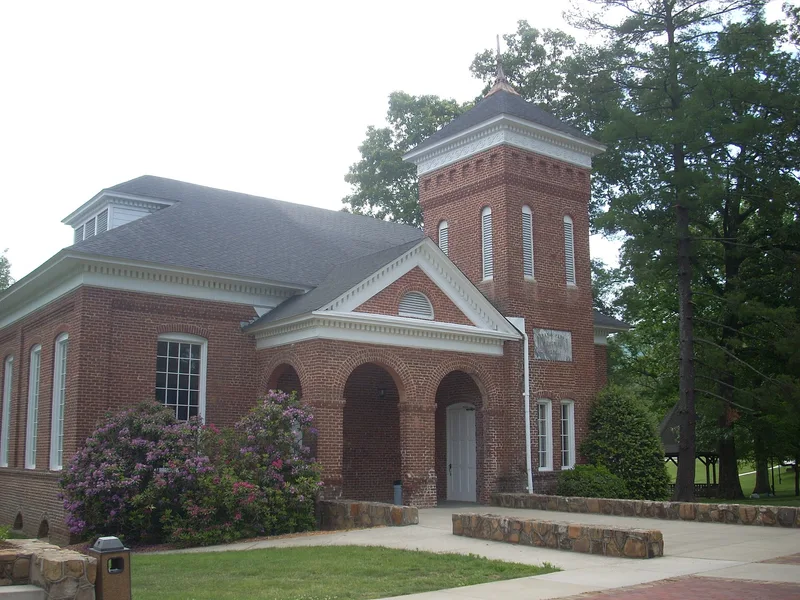
At the heart of the Young Harris College campus in Towns County, Georgia, a five-acre district preserves the college's two oldest surviving buildings and a section of historic grounds along Appleby Drive. Susan B. Harris Chapel, built in 1892, has brick corbeling, a denticulated cornice, an arcaded entrance and a two-story bell tower. Sharp Hall, completed in 1912, is a more utilitarian two-story brick building. Rock walkways, a 1945 well house, stone entrance gates and a row of cedars complete the setting. The Methodist Church South founded the school in 1886 for mountain youth, and it was named for benefactor Judge Young L.G. Harris in 1888. It became a junior college by 1912. In 1890 the trustees planned the street layout for both college and town, placing the chapel at its center. The district is recognized for education, religion, community planning, architecture and landscape architecture.
Machine-generated summary. This summary was generated by a language model from the official nomination document and has not been reviewed line by line by an editor. It may contain errors. Check the source document before relying on any detail. Source: nomination document (PDF) · catalog entry. Generated October 2026 (model claude-sonnet-5-5, prompt v1.0-2026-10-29).
| Period of significance | 1892-1940s |
|---|---|
| Styles | Vernacular turn-of-the-century college architecture |
| Areas of significance | Community Planning and Development, Landscape Architecture, Education, Architecture, Religion |
| Acreage | 0.5 |
| Boundary source | NPS cultural-resource GIS polygon |
| Full listing page | Young Harris College Historic District (property record) |
What listing means for this property
This is a historic district. Buildings within its boundary are either contributing (they add to the district's significance) or non-contributing. Owners of contributing income-producing buildings can claim the 20% federal rehabilitation tax credit; homeowners should look at state credits. National Register districts impose no design review by themselves; a local historic district ordinance, if one exists, does (the difference explained).
General information, not legal or tax advice. Rules change; confirm with your State Historic Preservation Office or a qualified adviser.