Winterville Historic District

Why it's listed
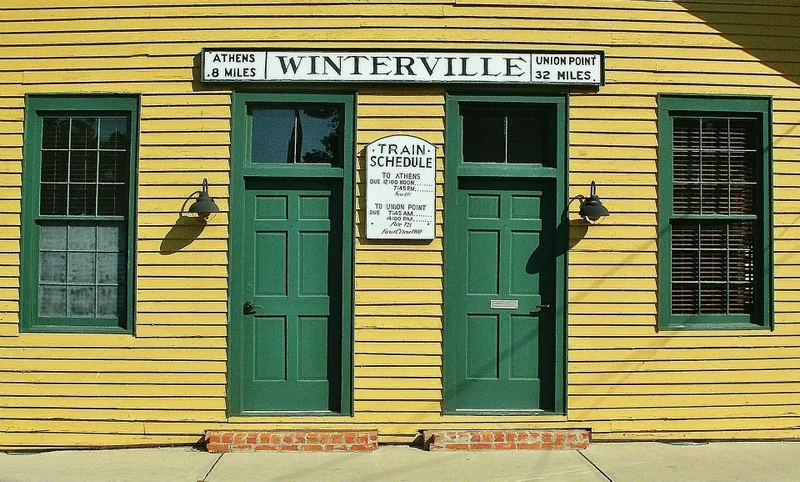
Winterville is a small railroad town east of Athens in Clarke County, Georgia, whose historic core grew up on both sides of the Georgia Railroad line. Streets run parallel and perpendicular to the old rail bed, with an open square and depot at the center. The district holds 65 contributing resources built between 1841 and 1953, including Queen Anne, Folk Victorian, Classical Revival and Craftsman houses, many built by local builder Hal O. Johnson. Community landmarks include the 1912 Pittard Bank, the c. 1890 depot, the Greek Revival Methodist Church designed by John William Barnett, and a group of four school buildings dating from 1920 to 1953. The town developed after the railroad arrived in 1841 and served farmers who shipped cotton and other crops. Its cross-rail plan is typical of Georgia railroad communities, and the high school was tied to a University of Georgia program training vocational teachers. Decline followed the railroad's loss of importance after World War II.
Machine-generated summary. This summary was generated by a language model from the official nomination document and has not been reviewed line by line by an editor. It may contain errors. Check the source document before relying on any detail. Source: nomination document (PDF) · catalog entry. Generated October 2026 (model claude-sonnet-5-5, prompt v1.0-2026-10-29).
| Period of significance | 1841-1953 |
|---|---|
| Styles | Late 19th and Early 20th Century Revivals (Colonial Revival, Classical Revival); Bungalow/Craftsman; Georgian cottage, center-hall cottage, gable-ell cottage, New South cottage, saddlebag house |
| Areas of significance | Architecture, Community Planning and Development, Transportation, Education |
| Acreage | 185 |
| Boundary source | NPS cultural-resource GIS polygon |
| Full listing page | Winterville Historic District (property record) |
What listing means for this property
This is a historic district. Buildings within its boundary are either contributing (they add to the district's significance) or non-contributing. Owners of contributing income-producing buildings can claim the 20% federal rehabilitation tax credit; homeowners should look at state credits. National Register districts impose no design review by themselves; a local historic district ordinance, if one exists, does (the difference explained).
General information, not legal or tax advice. Rules change; confirm with your State Historic Preservation Office or a qualified adviser.