Westover
Why it's listed
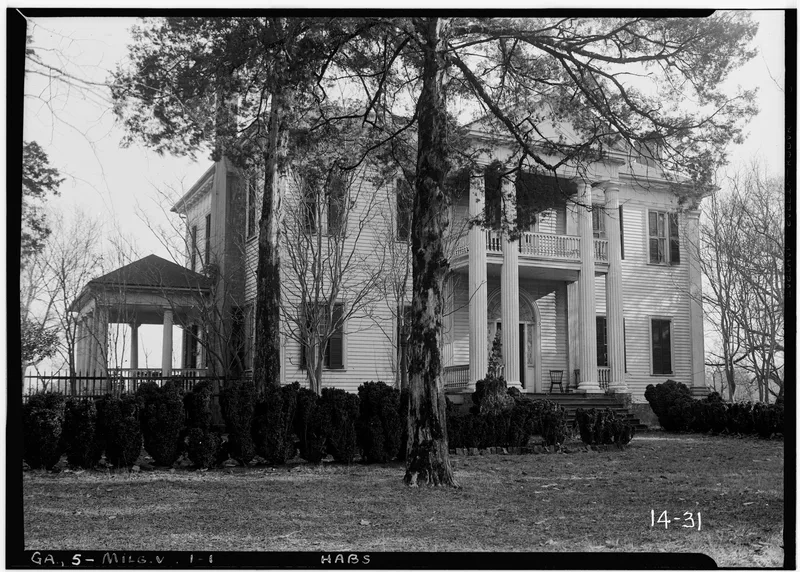
Westover is a former cotton-belt plantation of about 40 acres north of Milledgeville, Georgia, established around 1822 by planter Benjamin S. Jordan. The main house burned in 1954 and a reproduction now sits on the original foundations, but the surrounding landscape and service buildings remain. Formal front gardens use geometric planting beds, boxwood hedges, low brick curbs, circular and straight paths, and an antebellum picket fence. Some cedar and magnolia trees have been core-dated to the 1820s. Behind the house stand a commissary, smokehouse, the two ends of a detached kitchen and two slave houses, several framed with unusual L-shaped, hand-hewn corner posts. A brick plantation office, cisterns, a spring house and an unmarked slave cemetery complete the complex. The property was listed for its rare surviving formal antebellum landscaping, its outbuildings, and its potential to reveal more about plantation and enslaved life through archaeology.
Machine-generated summary. This summary was generated by a language model from the official nomination document and has not been reviewed line by line by an editor. It may contain errors. Check the source document before relying on any detail. Source: nomination document (PDF) · catalog entry. Generated October 2026 (model claude-sonnet-5-5, prompt v1.0-2026-10-29).
| Period of significance | 1800-1899 |
|---|---|
| Areas of significance | Landscape Architecture, Historic - Non-Aboriginal, Architecture |
| Acreage | 40.4 |
| Boundary source | NPS cultural-resource GIS polygon |
| Full listing page | Westover (property record) |
What listing means for this property
This is a historic district. Buildings within its boundary are either contributing (they add to the district's significance) or non-contributing. Owners of contributing income-producing buildings can claim the 20% federal rehabilitation tax credit; homeowners should look at state credits. National Register districts impose no design review by themselves; a local historic district ordinance, if one exists, does (the difference explained).
General information, not legal or tax advice. Rules change; confirm with your State Historic Preservation Office or a qualified adviser.