Waycross Historic District

Why it's listed
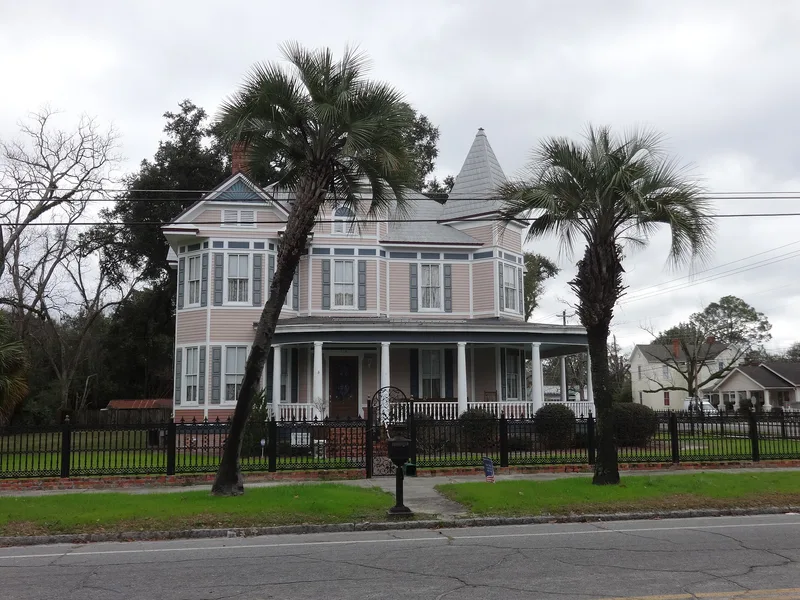
Waycross Historic District covers about 178 acres of the city's earliest residential neighborhood, laid out on flat, well-drained ground that was once forest. Wide, straight streets lined with oak, palm, pine and magnolia trees frame mostly Victorian houses, many built around 1880-1895. Notable examples include the 1894 W. W. Beach House on Lee Street and the 1888 Blackshear House on Gilmore Street, a Victorian reinterpretation of an antebellum house. Smaller cottages, shotgun worker housing, bungalows, a former hotel and the brick railroad depot add variety. The area was developed as the city's first subdivision after timber was harvested and shipped to ports such as Savannah. Railroad executives, doctors, lawyers and judges settled here, while railroad workers lived in more modest homes nearer the tracks. Gilmore Street and Plant Avenue were among the first paved streets in the city. The district was listed because its houses reflect the early prosperity of a railroad town and show a strong sense of individuality.
Machine-generated summary. This summary was generated by a language model from the official nomination document and has not been reviewed line by line by an editor. It may contain errors. Check the source document before relying on any detail. Source: nomination document (PDF) · catalog entry. Generated October 2026 (model claude-sonnet-5-5, prompt v1.0-2026-10-29).
| Styles | Predominantly Victorian, with Shingle style elements, bungalows and some masonry buildings |
|---|---|
| Areas of significance | Architecture |
| Acreage | 178 |
| Boundary source | NPS cultural-resource GIS polygon |
| Full listing page | Waycross Historic District (property record) |
What listing means for this property
This is a historic district. Buildings within its boundary are either contributing (they add to the district's significance) or non-contributing. Owners of contributing income-producing buildings can claim the 20% federal rehabilitation tax credit; homeowners should look at state credits. National Register districts impose no design review by themselves; a local historic district ordinance, if one exists, does (the difference explained).
General information, not legal or tax advice. Rules change; confirm with your State Historic Preservation Office or a qualified adviser.