Warm Springs Historic District

Why it's listed
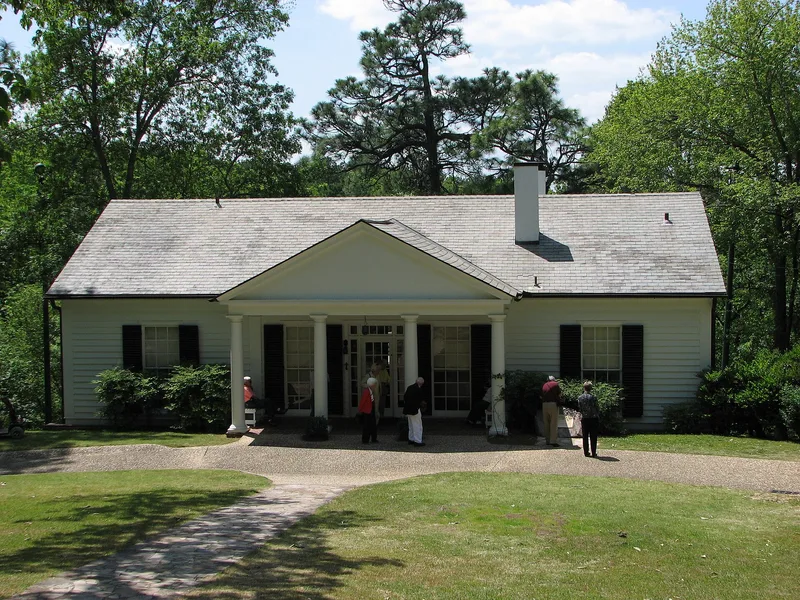
On the north slope of Pine Mountain in Warm Springs, Georgia, this district gathers the Warm Springs Foundation hospital complex, a golf course, private cottages and Franklin D. Roosevelt's Little White House. Springs flowing at a constant 89 degrees drew visitors long before the Foundation, first as a refuge for Native American warriors and later as a nineteenth-century resort. Roosevelt came in 1924 after contracting polio and founded the Foundation in 1927. Architect Henry Toombs designed most of the buildings over about forty years, including Georgia Hall, a chapel, and a quadrangle of connected structures around an open courtyard. Roosevelt's six-room clapboard cottage was completed in 1932. There, ideas for the National Bank Holiday and the Rural Electrification Administration took shape, and Roosevelt died there on April 12, 1945. The district is recognized for polio treatment, Roosevelt's political legacy and Toombs's architecture.
Machine-generated summary. This summary was generated by a language model from the official nomination document and has not been reviewed line by line by an editor. It may contain errors. Check the source document before relying on any detail. Source: nomination document (PDF) · catalog entry. Generated October 2026 (model claude-sonnet-5-5, prompt v1.0-2026-10-29).
| Period of significance | 1830's; 1880-90; 1927-late 1960's |
|---|---|
| Styles | Simple frame or brick buildings in a relaxed manner with classical details |
| Areas of significance | Science, Politics/Government, Social History |
| Acreage | 265 |
| Boundary source | NPS cultural-resource GIS polygon |
| Full listing page | Warm Springs Historic District (property record) |
What listing means for this property
This is a historic district. Buildings within its boundary are either contributing (they add to the district's significance) or non-contributing. Owners of contributing income-producing buildings can claim the 20% federal rehabilitation tax credit; homeowners should look at state credits. National Register districts impose no design review by themselves; a local historic district ordinance, if one exists, does (the difference explained).
General information, not legal or tax advice. Rules change; confirm with your State Historic Preservation Office or a qualified adviser.