Walnut Hill Historic District

Why it's listed
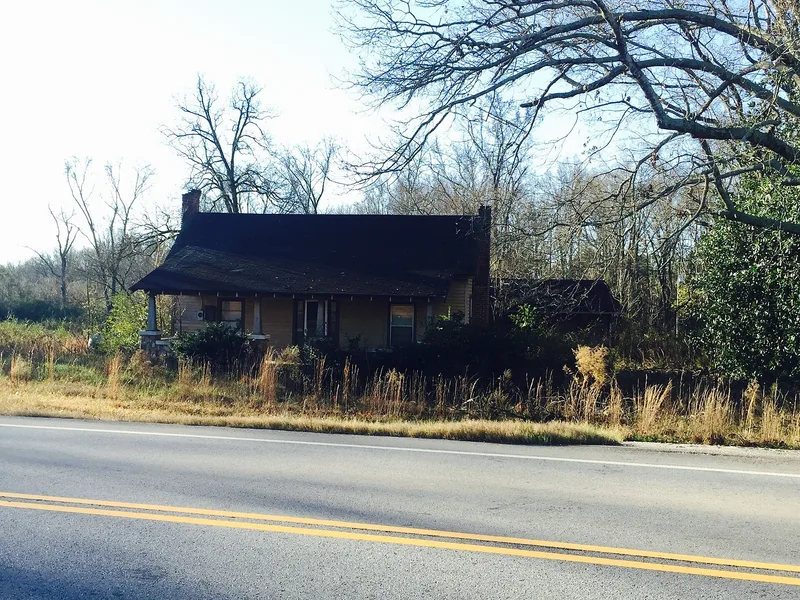
Walnut Hill is a rural farming community strung along the Old Federal Road near Carnesville, Franklin County. It includes 27 contributing resources: farmhouses, barns, wagon sheds, corn cribs, a tenant house, a store, a doctor's office, a windmill and a community cemetery. The houses range from a hall-parlor dwelling of about 1850 to a Folk Victorian house of 1885-86, a central-hallway house of about 1880 with a 1930s Craftsman porch, and a Georgian-plan cottage of about 1910. The community took shape in the 1850s around Indian Creek Baptist Church, founded in 1850, and the Payne family, who came from South Carolina and farmed with tenants, raised cotton as a cash crop and ran a sawmill and gristmill. Most farms were small and self-sufficient. Farming declined in the 1920s and 1930s with the boll weevil and the Depression. The district was recognized for its architecture, agriculture and linear community development between about 1850 and 1946.
Machine-generated summary. This summary was generated by a language model from the official nomination document and has not been reviewed line by line by an editor. It may contain errors. Check the source document before relying on any detail. Source: nomination document (PDF) · catalog entry. Generated October 2026 (model claude-sonnet-5-5, prompt v1.0-2026-10-29).
| Period of significance | C. 1850-1946 |
|---|---|
| Styles | Craftsman, Central Hallway, Hall-Parlor, Georgian Plan Cottage, Folk Victorian |
| Areas of significance | Agriculture, Architecture, Community Planning and Development |
| Acreage | 125 |
| Boundary source | NPS cultural-resource GIS polygon |
| Full listing page | Walnut Hill Historic District (property record) |
What listing means for this property
This is a historic district. Buildings within its boundary are either contributing (they add to the district's significance) or non-contributing. Owners of contributing income-producing buildings can claim the 20% federal rehabilitation tax credit; homeowners should look at state credits. National Register districts impose no design review by themselves; a local historic district ordinance, if one exists, does (the difference explained).
General information, not legal or tax advice. Rules change; confirm with your State Historic Preservation Office or a qualified adviser.