Vernon Square-Columbus Square Historic District

Why it's listed
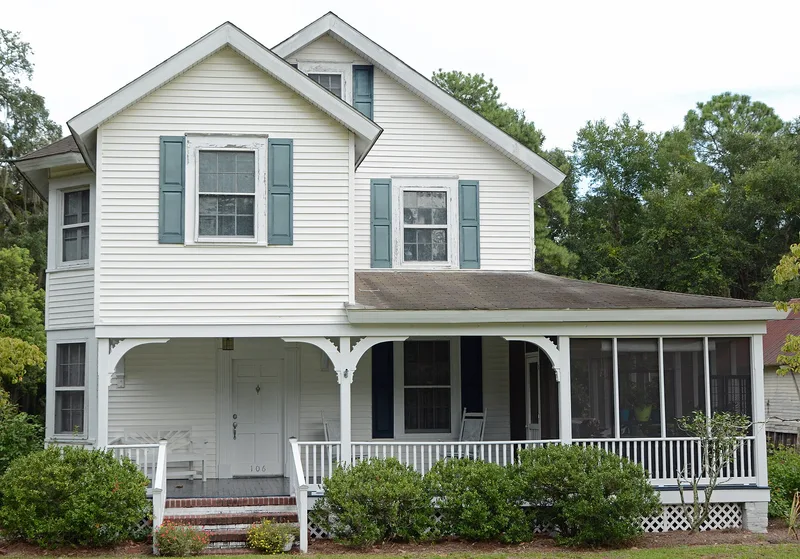
Vernon Square and Columbus Square are the two best-preserved wards of Darien, Georgia, a coastal town on a sandy bluff above the river. Each ward centers on a square flanked by trust lots and is laid out on wide streets, some still unpaved sand. The plan dates to a 1805 survey by Thomas McCall that traced its lineage to Oglethorpe's design for Savannah. Most buildings are wood-frame houses and churches built between the mid-19th and early 20th centuries, from shotgun and double-pen cottages to two-story homes in Greek Revival, Gothic Revival, Colonial Revival and Craftsman modes, adapted by local builders. A tabby church shows a traditional coastal material. Live oaks, shrubs and lawns give the squares an informal character. The area housed white timber brokers and mill workers alongside a notable black middle class, including a pharmacist, teacher, minister and political officeholders, during Darien's timber boom. These qualities of planning, architecture, landscape and local history supported its listing in 1985.
Machine-generated summary. This summary was generated by a language model from the official nomination document and has not been reviewed line by line by an editor. It may contain errors. Check the source document before relying on any detail. Source: nomination document (PDF) · catalog entry. Generated October 2026 (model claude-sonnet-5-5, prompt v1.0-2026-10-29).
| Period of significance | 1800-1899 and 1900- (specific dates 1805; mid-19th through early 20th century) |
|---|---|
| Styles | Greek Revival, Gothic Revival, Victorian Eclectic, Colonial Revival, Craftsman/Bungalow, and vernacular cottages |
| Areas of significance | Community Planning and Development, Architecture, Social History |
| Acreage | 45 |
| Boundary source | NPS cultural-resource GIS polygon |
| Full listing page | Vernon Square-Columbus Square Historic District (property record) |
What listing means for this property
This is a historic district. Buildings within its boundary are either contributing (they add to the district's significance) or non-contributing. Owners of contributing income-producing buildings can claim the 20% federal rehabilitation tax credit; homeowners should look at state credits. National Register districts impose no design review by themselves; a local historic district ordinance, if one exists, does (the difference explained).
General information, not legal or tax advice. Rules change; confirm with your State Historic Preservation Office or a qualified adviser.