Valdosta Commercial Historic District (Boundary Increase)

Why it's listed
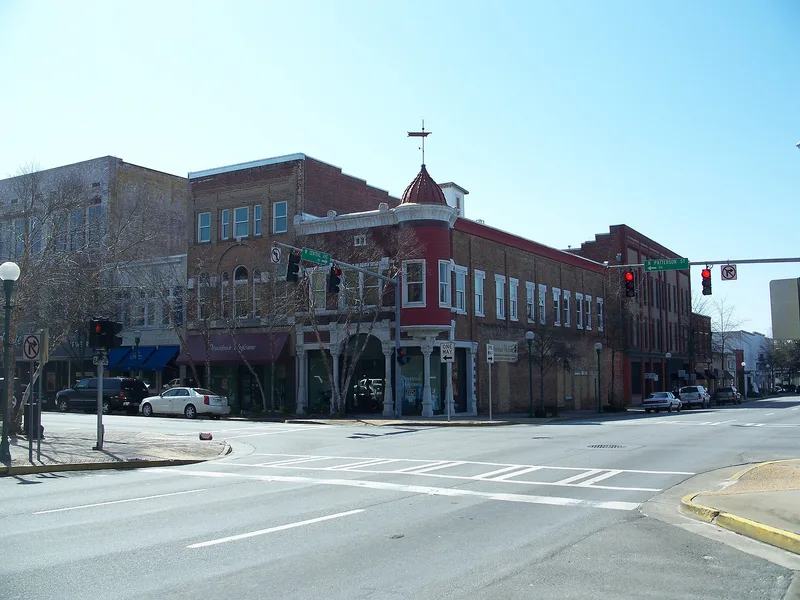
Downtown Valdosta's commercial core was first listed in 1983, and this update enlarges it by two acres on the north and south sides. Six buildings were added: the 1898 First Baptist Church designed by Stephen F. Fulgham, a late-1930s telephone exchange, a Streamline Moderne automobile dealership from about 1940, a furniture building from about 1900, and two brick warehouses. Ten buildings once judged noncontributing were reclassified after reaching fifty years of age or having false facades removed, including a 1940s International Style Kress store front and a 1947 Big Star Food Store. Two monuments on the courthouse square were also counted. The district reflects Valdosta's role as a regional commerce center, its gridiron plan and courthouse square dating to the 1860 incorporation, and its function as the county's governmental center. The period of significance now runs from 1860 to 1952, the year the last major building was completed.
Machine-generated summary. This summary was generated by a language model from the official nomination document and has not been reviewed line by line by an editor. It may contain errors. Check the source document before relying on any detail. Source: nomination document (PDF) · catalog entry. Generated October 2026 (model claude-sonnet-5-5, prompt v1.0-2026-10-29).
| Period of significance | 1860-1952 |
|---|---|
| Styles | Late Victorian: Romanesque; Commercial Style; Modern Movement: Moderne, International Style |
| Areas of significance | Architecture, Commerce, Community Planning and Development, Politics/Government |
| Acreage | 2 |
| Boundary source | NPS cultural-resource GIS polygon |
| Full listing page | Valdosta Commercial Historic District (Boundary Increase) (property record) |
What listing means for this property
This is a historic district. Buildings within its boundary are either contributing (they add to the district's significance) or non-contributing. Owners of contributing income-producing buildings can claim the 20% federal rehabilitation tax credit; homeowners should look at state credits. National Register districts impose no design review by themselves; a local historic district ordinance, if one exists, does (the difference explained).
General information, not legal or tax advice. Rules change; confirm with your State Historic Preservation Office or a qualified adviser.