Upper Lott's Creek Primitive Baptist Church and Cemetery
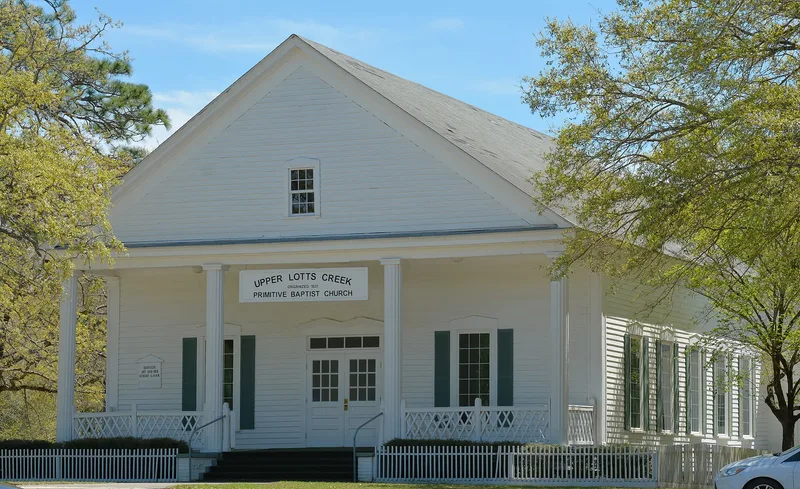

Why it's listed
Upper Lott's Creek Primitive Baptist Church and Cemetery lies near Portal in Bulloch County, southeast Georgia. The property includes a one-story, wood-framed church built in 1881, a cemetery with 328 marked graves, and a creek where members were baptized until the mid-20th century. The church has Greek Revival elements: a pedimented front gable, rounded portico columns, corner pilasters and a frieze board. Alterations in 1945 replaced the original two entry doors with a central double door and reorganized the pews around a center aisle, reflecting the end of separate seating for men and women. A concrete-block annex was added in 1959. The cemetery follows a gridiron plan, with first recorded burials in 1902 and some unmarked graves possibly older. The congregation formed in 1832 under Absalom Parrish and is described as one of the oldest Primitive Baptist congregations in Georgia. The property was recognized for its architecture, cemetery landscape and religious history, and it remains in active use.
Machine-generated summary. This summary was generated by a language model from the official nomination document and has not been reviewed line by line by an editor. It may contain errors. Check the source document before relying on any detail. Source: nomination document (PDF) · catalog entry. Generated October 2026 (model claude-sonnet-5-5, prompt v1.0-2026-10-29).
| Period of significance | 1881-1959 |
|---|---|
| Styles | Mid-19th Century: Greek Revival |
| Areas of significance | Architecture, Landscape Architecture, Religion |
| Acreage | 15 |
| Boundary source | NPS cultural-resource GIS polygon |
| Full listing page | Upper Lott's Creek Primitive Baptist Church and Cemetery (property record) |
What listing means for this property
This is a historic district. Buildings within its boundary are either contributing (they add to the district's significance) or non-contributing. Owners of contributing income-producing buildings can claim the 20% federal rehabilitation tax credit; homeowners should look at state credits. National Register districts impose no design review by themselves; a local historic district ordinance, if one exists, does (the difference explained).
General information, not legal or tax advice. Rules change; confirm with your State Historic Preservation Office or a qualified adviser.