Tybee Island Strand Cottages Historic District

Why it's listed
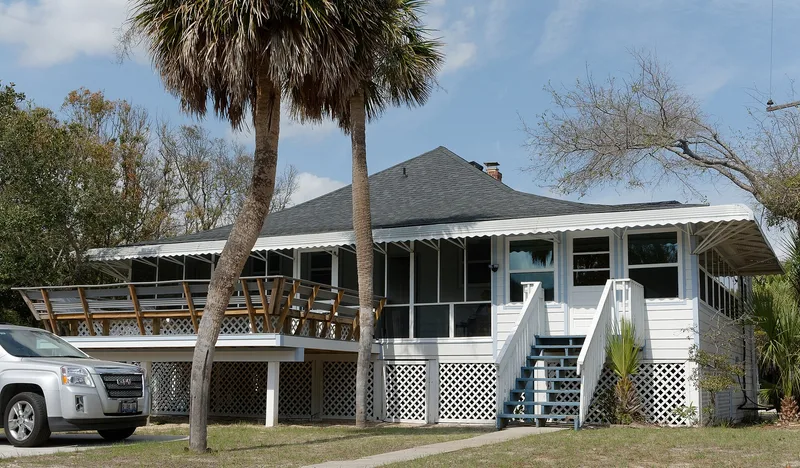
Along Butler Avenue between 12th and 14th Streets on Tybee Island, a row of wooden summer cottages survives from the island's years as a seaside resort. Built mostly between 1895 and 1930, the houses sit on raised wooden piers with hipped or gabled roofs, wrap-around porches and tall floor-to-ceiling windows. The ground level held servants' quarters and changing rooms. Later cottages, built after Tybee Road opened in 1923, are smaller and square, with garage space added beneath. The cottages occupy long narrow lots laid out in an 1873 subdivision, with coastal vegetation along the lot lines and walkways linking each house to its neighbors and the ocean. Tybee is described as the only Georgia barrier island developed as a resort for the general public, with middle-class families using these seasonal homes. Later development removed much of the original Strand, leaving these cottages as what remains of that resort community. The district is recognized for its role in resort development and for its architecture and landscape.
Machine-generated summary. This summary was generated by a language model from the official nomination document and has not been reviewed line by line by an editor. It may contain errors. Check the source document before relying on any detail. Source: nomination document (PDF) · catalog entry. Generated October 2026 (model claude-sonnet-5-5, prompt v1.0-2026-10-29).
| Period of significance | 1873 to 1930 |
|---|---|
| Styles | Other: Strand Cottages; Other: Raised Tybee Cottages |
| Areas of significance | Community Planning and Development, Entertainment/Recreation, Architecture, Landscape Architecture |
| Acreage | 10 |
| Boundary source | NPS cultural-resource GIS polygon |
| Full listing page | Tybee Island Strand Cottages Historic District (property record) |
What listing means for this property
This is a historic district. Buildings within its boundary are either contributing (they add to the district's significance) or non-contributing. Owners of contributing income-producing buildings can claim the 20% federal rehabilitation tax credit; homeowners should look at state credits. National Register districts impose no design review by themselves; a local historic district ordinance, if one exists, does (the difference explained).
General information, not legal or tax advice. Rules change; confirm with your State Historic Preservation Office or a qualified adviser.