Tybee Island Back River Historic District

Why it's listed
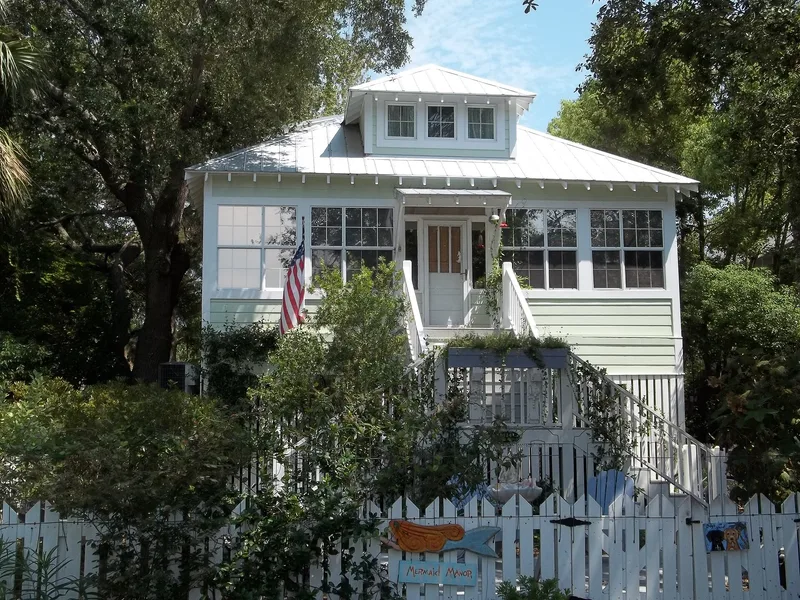
Along the Tybee River inlet, also called the Back River, at the southern tip of Tybee Island, Georgia, a string of beach cottages sits on long, narrow lots lined with palmettos, wax myrtles and live oaks. The district includes the 1888 Chatham Artillery Clubhouse, the two-story Colony Row cottages near The Point, later year-round houses, private docks, a 1937-38 concrete sea wall and a Coast Guard survey tower. It matters because Tybee was the only Georgia barrier island developed as a resort for ordinary families rather than the wealthy. Lots were subdivided in 1885-86, and the railroad arrived in 1887, shaping a pattern of centered cottages and preserved coastal vegetation. After Tybee Road opened in 1923, the cottages shifted from summer retreats to permanent homes, and the island population rose from 202 in 1930 to about 640 by 1940. The district reflects both periods of development.
Machine-generated summary. This summary was generated by a language model from the official nomination document and has not been reviewed line by line by an editor. It may contain errors. Check the source document before relying on any detail. Source: nomination document (PDF) · catalog entry. Generated October 2026 (model claude-sonnet-5-5, prompt v1.0-2026-10-29).
| Period of significance | 1886-1948 |
|---|---|
| Styles | Raised Cottage; New South Cottage |
| Areas of significance | Community Planning and Development, Entertainment/Recreation, Architecture, Landscape Architecture |
| Acreage | 30 |
| Boundary source | NPS cultural-resource GIS polygon |
| Full listing page | Tybee Island Back River Historic District (property record) |
What listing means for this property
This is a historic district. Buildings within its boundary are either contributing (they add to the district's significance) or non-contributing. Owners of contributing income-producing buildings can claim the 20% federal rehabilitation tax credit; homeowners should look at state credits. National Register districts impose no design review by themselves; a local historic district ordinance, if one exists, does (the difference explained).
General information, not legal or tax advice. Rules change; confirm with your State Historic Preservation Office or a qualified adviser.