Toccoa Downtown Historic District (Boundary Increase)

The National Park Service has not published a boundary polygon for this district; the map shows the listed properties inside it and the district's reference point.
Why it's listed
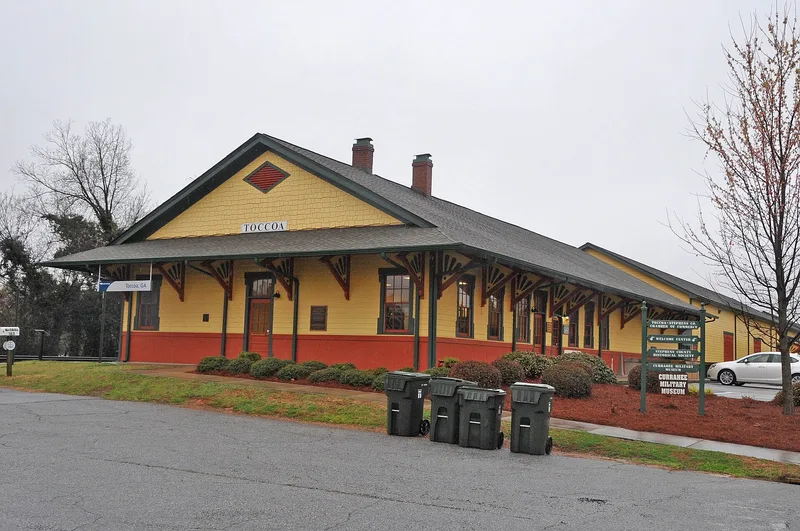
Downtown Toccoa, the county seat of Stephens County in northeast Georgia, is a compact commercial district laid out on a grid along a ridge top. The town was platted after 1871-1872 land purchases, and lots went on sale in 1873, the same year the Atlanta & Richmond Air-Line Railroad arrived. The railroad turned a small village into a wholesale, cotton-processing and shipping center. Most of the district consists of one- and two-story attached brick storefronts built between the 1880s and 1940s, concentrated along Doyle Street. Landmarks include the 1908 courthouse on the highest ground, the 1932 former post office now serving as city hall, the 1925 First Presbyterian Church, and the restored c. 1915 depot. A few houses, apartments and service stations also survive. A 1949 steel and concrete bridge over the tracks is the only known use of its timber-concrete composite technology in Georgia before 1955. Contributing buildings date from 1880 to 1964.
Machine-generated summary. This summary was generated by a language model from the official nomination document and has not been reviewed line by line by an editor. It may contain errors. Check the source document before relying on any detail. Source: nomination document (PDF). Generated October 2026 (model claude-sonnet-5-5, prompt v1.0-2026-10-29).
| Styles | Late Victorian: Queen Anne; Commercial Style; Classical Revival; Bungalow; International Style |
|---|---|
| Areas of significance | Architecture |
| Acreage | 0.9 |
| Boundary source | not published |
| Full listing page | Toccoa Downtown Historic District (Boundary Increase) (property record) |
What listing means for this property
This is a historic district. Buildings within its boundary are either contributing (they add to the district's significance) or non-contributing. Owners of contributing income-producing buildings can claim the 20% federal rehabilitation tax credit; homeowners should look at state credits. National Register districts impose no design review by themselves; a local historic district ordinance, if one exists, does (the difference explained).
General information, not legal or tax advice. Rules change; confirm with your State Historic Preservation Office or a qualified adviser.