Talmo Historic District

Why it's listed
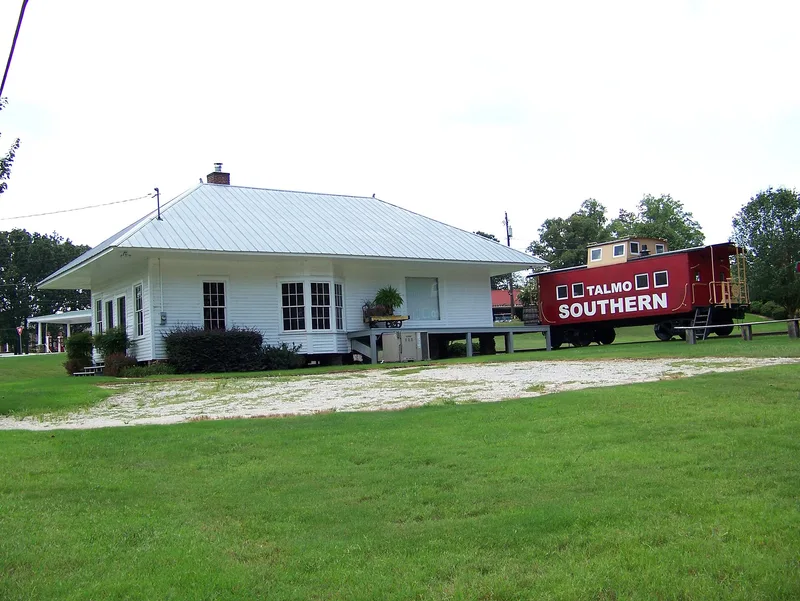
Talmo is a small railroad and crossroads town in Jackson County, Georgia, about 10 miles north of Jefferson. Its historic district centers on the intersection of Main Street (GA 332), Kinney Avenue and A. J. Irvin Road, where two general stores and a c. 1900 frame depot face the tracks. Six houses nearby reflect vernacular building traditions of the Georgia Piedmont after the Civil War, including hall-parlor, pyramidal and gabled-ell forms with Folk Victorian, Queen Anne and Craftsman details. The district is significant because the town grew almost entirely after a railroad reached it in 1883, and buildings still line the rail and highway corridor. Cotton from the surrounding area, known as the Talmo Cotton District, supported prosperity until the boll weevil in 1919 and 1920 and the Depression slowed growth. Passenger service ended in 1959. The district covers about 40 acres and includes 10 contributing buildings, the railroad, and five newer buildings.
Machine-generated summary. This summary was generated by a language model from the official nomination document and has not been reviewed line by line by an editor. It may contain errors. Check the source document before relying on any detail. Source: nomination document (PDF) · catalog entry. Generated October 2026 (model claude-sonnet-5-5, prompt v1.0-2026-10-29).
| Period of significance | c.1880-1947 |
|---|---|
| Styles | Vernacular; Folk Victorian; Queen Anne; Classical Revival; Craftsman |
| Areas of significance | Architecture, Community Planning and Development, Transportation |
| Acreage | 40 |
| Boundary source | NPS cultural-resource GIS polygon |
| Full listing page | Talmo Historic District (property record) |
What listing means for this property
This is a historic district. Buildings within its boundary are either contributing (they add to the district's significance) or non-contributing. Owners of contributing income-producing buildings can claim the 20% federal rehabilitation tax credit; homeowners should look at state credits. National Register districts impose no design review by themselves; a local historic district ordinance, if one exists, does (the difference explained).
General information, not legal or tax advice. Rules change; confirm with your State Historic Preservation Office or a qualified adviser.