Tallulah Falls School

Why it's listed
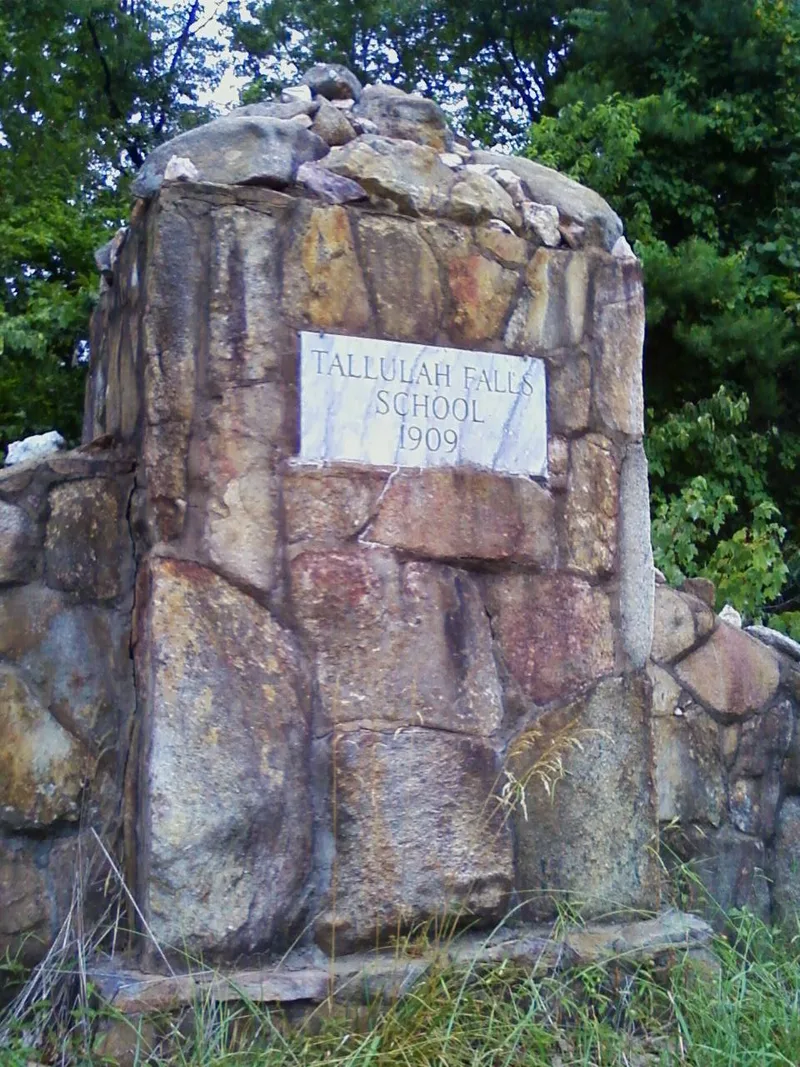
Tallulah Falls School occupies a mountainside campus in northeast Georgia, close to Tallulah Gorge. It began in 1909 when the Georgia Federation of Women's Clubs, led by Mary Ann Lipscomb, opened a school for children of remote mountain families on five donated acres. Lipscomb Cottage, designed by Athens architect Fred Orr and built by J. A. Saye, set the pattern: rough local stone, exposed timbers and dark stains meant to blend with the hillside. Later buildings such as the Giddings Clinic, Sheldon Workshop, Trustees' Guest House and faculty houses followed this Craftsman-influenced approach, ending with the Willet Building of 1946. From 1917 students built stone walls, steps, terraces and memorial gates, partly to control erosion. The campus is recognized for its educational history, its architecture and its landscape work. The school still operates, and Lipscomb Cottage now houses its museum. Losses include several earlier buildings, though their sites and landscaping remain.
Machine-generated summary. This summary was generated by a language model from the official nomination document and has not been reviewed line by line by an editor. It may contain errors. Check the source document before relying on any detail. Source: nomination document (PDF) · catalog entry. Generated October 2026 (model claude-sonnet-5-5, prompt v1.0-2026-10-29).
| Period of significance | 1909-1946 |
|---|---|
| Styles | Bungalow/Craftsman |
| Areas of significance | Landscape Architecture, Education, Architecture |
| Acreage | 35 |
| Boundary source | NPS cultural-resource GIS polygon |
| Full listing page | Tallulah Falls School (property record) |
What listing means for this property
This is a historic district. Buildings within its boundary are either contributing (they add to the district's significance) or non-contributing. Owners of contributing income-producing buildings can claim the 20% federal rehabilitation tax credit; homeowners should look at state credits. National Register districts impose no design review by themselves; a local historic district ordinance, if one exists, does (the difference explained).
General information, not legal or tax advice. Rules change; confirm with your State Historic Preservation Office or a qualified adviser.