Summers Street Historic District

Why it's listed
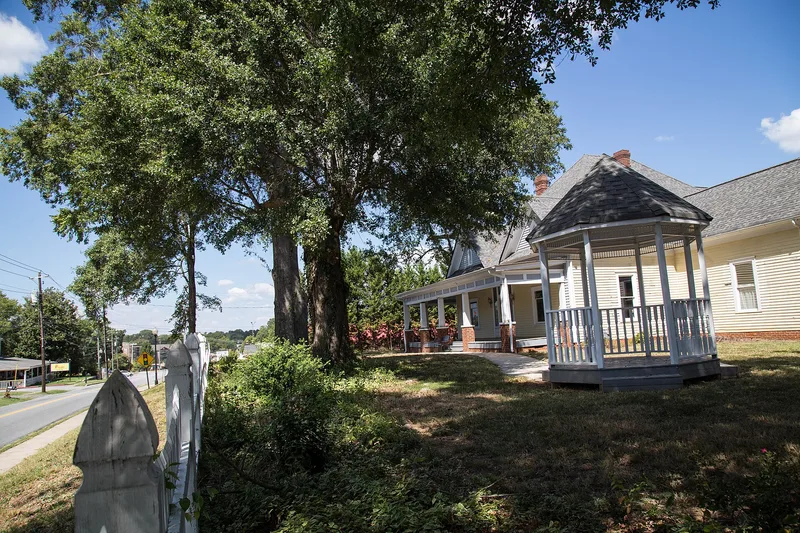
Summers Street in Kennesaw, Georgia, preserves a short row of late-nineteenth-century houses on about six acres between South Main Street and West Road. Most stand on the southwest side of the street and share a similar setback and scale on small lots. They are modest one- and two-story frame buildings, with Queen Anne, Eastlake and Craftsman detailing. A farmhouse on a knoll at the southern end marks the historic edge of town and has an updated Craftsman-style porch. The street follows part of the old Cassville Road, one of the town's nineteenth-century wagon roads, and the district is described as a smaller counterpart to the Cherokee Street area. Some of the houses are among the most elaborately detailed in Kennesaw. Two were built by sons of Civil War-era merchant John W. "Bacon" Hill, and another remains in the family of Major Hiram Butler, an early Big Shanty settler. Two later buildings, a repair shop and a contemporary house, are counted as intrusions.
Machine-generated summary. This summary was generated by a language model from the official nomination document and has not been reviewed line by line by an editor. It may contain errors. Check the source document before relying on any detail. Source: nomination document (PDF) · catalog entry. Generated October 2026 (model claude-sonnet-5-5, prompt v1.0-2026-10-29).
| Styles | Modest one- and two-story frame houses with Queen Anne, Eastlake and Craftsman detailing |
|---|---|
| Areas of significance | Transportation, Architecture |
| Acreage | 6 |
| Boundary source | NPS cultural-resource GIS polygon |
| Full listing page | Summers Street Historic District (property record) |
What listing means for this property
This is a historic district. Buildings within its boundary are either contributing (they add to the district's significance) or non-contributing. Owners of contributing income-producing buildings can claim the 20% federal rehabilitation tax credit; homeowners should look at state credits. National Register districts impose no design review by themselves; a local historic district ordinance, if one exists, does (the difference explained).
General information, not legal or tax advice. Rules change; confirm with your State Historic Preservation Office or a qualified adviser.