Starrsville Historic District

Why it's listed
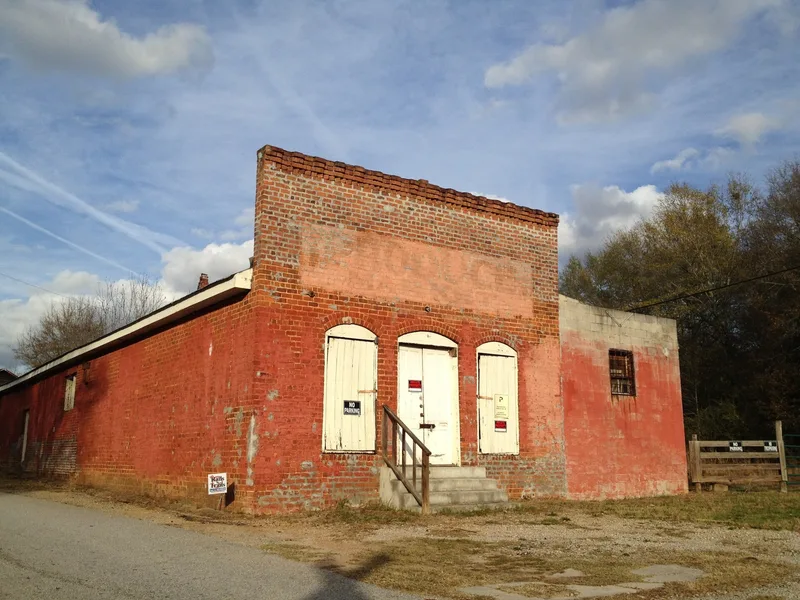
Starrsville is a rural district in east Newton County, Georgia, set on high ground between the Alcovy River and several creeks. It includes 49 contributing buildings, six sites and two structures. The community began in 1821 at a crossroads, now called Old Starrsville, and took its name from the Starr family, who built an early store and houses there. When the Middle Georgia and Atlantic Railroad was completed in 1893, it passed a mile northwest, and a second center, New Starrsville, grew up around a depot, a brick mercantile building and warehouses. Surrounding farmsteads include Greek Revival, Queen Anne, Georgian and Folk Victorian houses, barns, family cemeteries and a Gothic Revival Methodist church built in 1901. Field patterns, fence lines and an orchard still match a 1940 aerial photograph. The district was listed for its agricultural history, community development, architecture, transportation, commerce and African-American heritage, covering 1821 to 1948.
Machine-generated summary. This summary was generated by a language model from the official nomination document and has not been reviewed line by line by an editor. It may contain errors. Check the source document before relying on any detail. Source: nomination document (PDF) · catalog entry. Generated October 2026 (model claude-sonnet-5-5, prompt v1.0-2026-10-29).
| Period of significance | 1821-1948 |
|---|---|
| Styles | Greek Revival, Gothic Revival, Italianate, Colonial Revival, Craftsman, Folk Victorian, Central Hallway cottage, Queen Anne cottage, Georgian cottage and house, New South cottage |
| Areas of significance | Agriculture, Community Planning and Development, Architecture, Exploration/Settlement, Transportation, Black, Commerce |
| Acreage | 1720 |
| Boundary source | NPS cultural-resource GIS polygon |
| Full listing page | Starrsville Historic District (property record) |
What listing means for this property
This is a historic district. Buildings within its boundary are either contributing (they add to the district's significance) or non-contributing. Owners of contributing income-producing buildings can claim the 20% federal rehabilitation tax credit; homeowners should look at state credits. National Register districts impose no design review by themselves; a local historic district ordinance, if one exists, does (the difference explained).
General information, not legal or tax advice. Rules change; confirm with your State Historic Preservation Office or a qualified adviser.