South Main Street Historic District

The National Park Service has not published a boundary polygon for this district; the map shows the listed properties inside it and the district's reference point.
Why it's listed
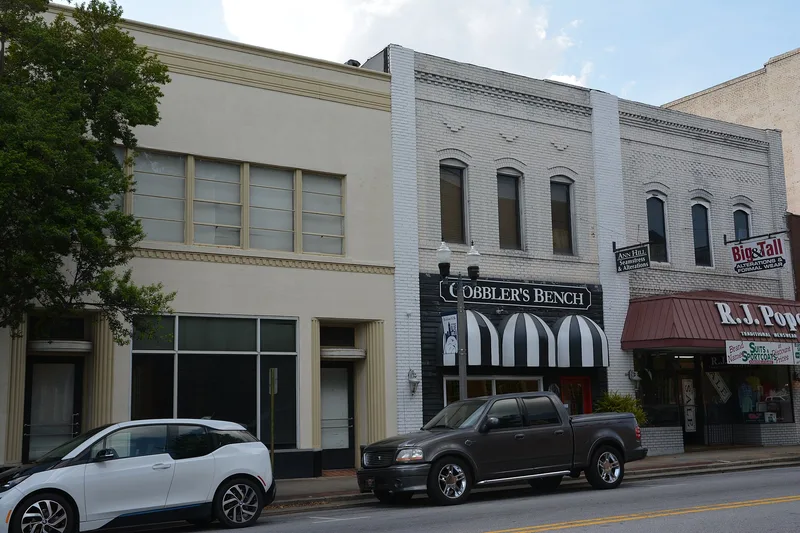
Five attached brick storefronts on the west side of South Main Street in downtown Statesboro make up this small commercial district. Built between 1900 and 1915, most are two stories tall and share uniform setbacks with no gaps between them. Detailing is modest: round or segmental arched windows, corbeled or denticulated brickwork, and pressed-metal cornices. Local contractors Walter Aldred Jr., L. R. Blackburn and A. J. Franklin are credited with the construction. The row grew up near the courthouse and cotton warehouses, in the first commercial section of town after the railroad arrived in 1889. Businesses here have included grocery, furniture, dry goods and clothing stores, and an Odd Fellows hall met upstairs by 1908. The Statesboro Telephone Company building received a Moderne facade in 1938, one of only two in the city. The district was recognized for its role in local commerce and as the best-preserved group of early storefronts on this street.
Machine-generated summary. This summary was generated by a language model from the official nomination document and has not been reviewed line by line by an editor. It may contain errors. Check the source document before relying on any detail. Source: nomination document (PDF) · catalog entry. Generated October 2026 (model claude-sonnet-5-5, prompt v1.0-2026-10-29).
| Period of significance | 1900-1938 |
|---|---|
| Styles | Commercial Style, Italianate, Moderne |
| Areas of significance | Commerce, Architecture |
| Acreage | 0.9 |
| Boundary source | not published |
| Full listing page | South Main Street Historic District (property record) |
What listing means for this property
This is a historic district. Buildings within its boundary are either contributing (they add to the district's significance) or non-contributing. Owners of contributing income-producing buildings can claim the 20% federal rehabilitation tax credit; homeowners should look at state credits. National Register districts impose no design review by themselves; a local historic district ordinance, if one exists, does (the difference explained).
General information, not legal or tax advice. Rules change; confirm with your State Historic Preservation Office or a qualified adviser.