Sims, George R., House

Why it's listed
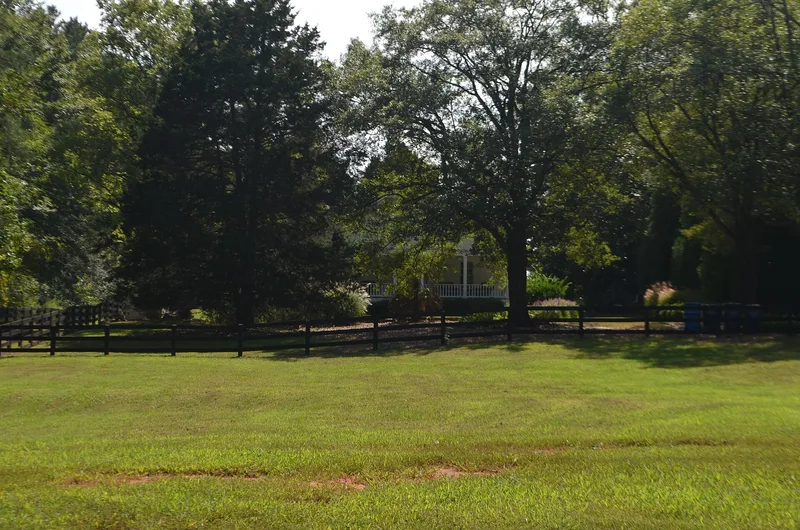
Set on a high knoll about four miles east of Palmetto in Coweta County, this two-story wood-frame house was built around 1850 for planter George Redding Sims, one of the county's largest antebellum landowners. Its Greek Revival design rests on an unusual modified Georgian plan, which created a projecting front gable and a two-story L-shaped portico with five fluted Doric columns. The main entrance has a transom, sidelights, pilasters and Greek key detailing. Inside, a central hall holds a dogleg stairway with turned balusters, along with heart-pine floors, original mantels and dog-eared door and window surrounds. A major renovation around 1940 added a brick foundation, a kitchen, baths and some Neoclassical Revival mantels and moldings. A c. 1850 carriage house and a 1939 water tower also contribute, while a moved tenant house and a deteriorated barn do not. The property was recognized for its architecture, as an excellent and unusual example of Greek Revival design in a plantation setting.
Machine-generated summary. This summary was generated by a language model from the official nomination document and has not been reviewed line by line by an editor. It may contain errors. Check the source document before relying on any detail. Source: nomination document (PDF) · catalog entry. Generated October 2026 (model claude-sonnet-5-5, prompt v1.0-2026-10-29).
| Period of significance | c. 1850 |
|---|---|
| Styles | Mid-19th Century: Greek Revival |
| Areas of significance | Architecture |
| Acreage | 16 |
| Boundary source | NPS cultural-resource GIS polygon |
| Full listing page | Sims, George R., House (property record) |
What listing means for this property
This is a historic district. Buildings within its boundary are either contributing (they add to the district's significance) or non-contributing. Owners of contributing income-producing buildings can claim the 20% federal rehabilitation tax credit; homeowners should look at state credits. National Register districts impose no design review by themselves; a local historic district ordinance, if one exists, does (the difference explained).
General information, not legal or tax advice. Rules change; confirm with your State Historic Preservation Office or a qualified adviser.