Simmons-Cullars House

Why it's listed
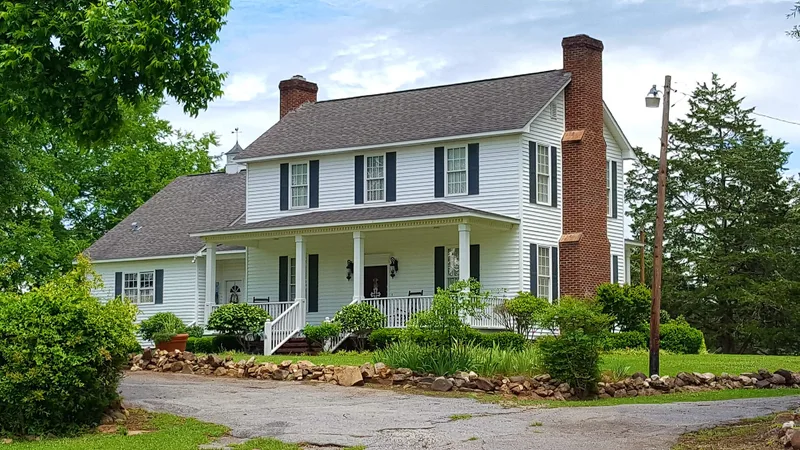
Twelve Oaks, also called the Simmons-Cullars House, is a farm complex in rural Lincoln County, Georgia, near the Goshen community. Its core is a two-story, side-gabled I-house built about 1826 with heavy pegged timber framing and weatherboard siding. Rear ells were added about 1830 and 1905, and a detached kitchen was later joined to the house by a corridor. Ten historic outbuildings survive, including a smokehouse, chicken house, brooder house, store, carriage house, greenhouse, and log playhouse. The property is notable architecturally because early I-houses are uncommon in Georgia and because its additions record changing owner needs. It is also significant in agriculture and commerce. The farm grew to nearly 1,500 acres by the Civil War, grew mainly cotton and corn, and later became a center of the local lumber business under T. W. Cullars. The store served tenant farmers and neighbors into the 1950s, and the period of significance closes with Cullars's death in 1948.
Machine-generated summary. This summary was generated by a language model from the official nomination document and has not been reviewed line by line by an editor. It may contain errors. Check the source document before relying on any detail. Source: nomination document (PDF) · catalog entry. Generated October 2026 (model claude-sonnet-5-5, prompt v1.0-2026-10-29).
| Period of significance | c.1826-1948 |
|---|---|
| Styles | Other: I-house |
| Areas of significance | Agriculture, Architecture, Commerce |
| Acreage | 14.7 |
| Boundary source | NPS cultural-resource GIS polygon |
| Full listing page | Simmons-Cullars House (property record) |
What listing means for this property
This is a historic district. Buildings within its boundary are either contributing (they add to the district's significance) or non-contributing. Owners of contributing income-producing buildings can claim the 20% federal rehabilitation tax credit; homeowners should look at state credits. National Register districts impose no design review by themselves; a local historic district ordinance, if one exists, does (the difference explained).
General information, not legal or tax advice. Rules change; confirm with your State Historic Preservation Office or a qualified adviser.