Shellman Historic District

Why it's listed
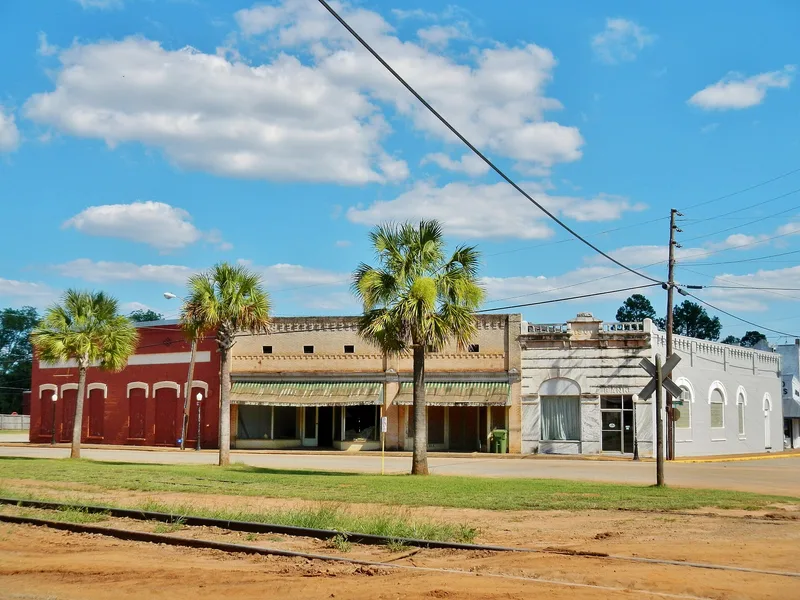
Shellman, in Randolph County, Georgia, grew up around a railroad stop. The Southwest Georgia Railroad reached the area in 1859, and the depot was first called Ward's Station. The settlement was incorporated as Shellman in 1883 and became a prosperous cotton shipping and mercantile center. The historic district preserves that town: a dense core of one- and two-story brick commercial buildings, nearly all built after an 1894 fire, with corbeled cornices, arched windows and cast-iron columns. Around it are wood-framed houses ranging from small cottages and workers' saddlebag houses to substantial Victorian Eclectic, Neoclassical and Craftsman residences. Two regional firms, T. Firth Lockwood of Columbus and Denis and Denis of Macon, designed houses here. The wood depot, the railroad right-of-way, the churches, the cemetery and informal street-tree and yard landscaping complete the setting. The district was recognized for its planning history, architecture, commerce, landscape and the homes of the townspeople who shaped it.
Machine-generated summary. This summary was generated by a language model from the official nomination document and has not been reviewed line by line by an editor. It may contain errors. Check the source document before relying on any detail. Source: nomination document (PDF) · catalog entry. Generated October 2026 (model claude-sonnet-5-5, prompt v1.0-2026-10-29).
| Period of significance | 1880s - 1920s |
|---|---|
| Styles | Late Victorian commercial; Victorian Eclectic, Neoclassical and Bungalow/Craftsman residential |
| Areas of significance | Community Planning and Development, Landscape Architecture, Commerce, Transportation, Architecture |
| Acreage | 200 |
| Boundary source | NPS cultural-resource GIS polygon |
| Full listing page | Shellman Historic District (property record) |
What listing means for this property
This is a historic district. Buildings within its boundary are either contributing (they add to the district's significance) or non-contributing. Owners of contributing income-producing buildings can claim the 20% federal rehabilitation tax credit; homeowners should look at state credits. National Register districts impose no design review by themselves; a local historic district ordinance, if one exists, does (the difference explained).
General information, not legal or tax advice. Rules change; confirm with your State Historic Preservation Office or a qualified adviser.