Sargent Historic District

Why it's listed
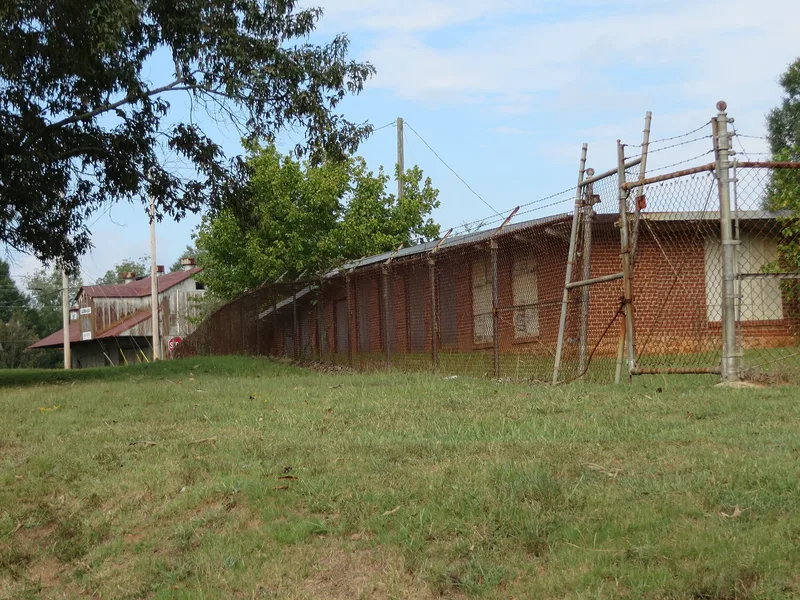
Sargent is a Georgia mill village five miles northwest of Newnan, built around textile mills powered by Wahoo Creek. The Willcoxon Manufacturing Company began a cotton rope and yarn mill in 1866, and after it burned in 1906 a new mill opened in 1907, later known as Wahoo Manufacturing and then Arnall Mill. The district holds the mill complex, warehouses, a 1930s company store, a baseball field, water tanks, and well over a hundred houses. Most are simple frame dwellings rented to workers, including shotguns, saddlebags, saltboxes, bungalows and duplexes, arranged in the Old Town and New Town sections, with a separate area for African-American workers. The company controlled housing, shopping, farming and recreation. Its significance rests on how clearly the district shows this planned industrial community and its modest, standardized architecture. The Arnall Mill closed in 1986, though many retirees still live in the village.
Machine-generated summary. This summary was generated by a language model from the official nomination document and has not been reviewed line by line by an editor. It may contain errors. Check the source document before relying on any detail. Source: nomination document (PDF) · catalog entry. Generated October 2026 (model claude-sonnet-5-5, prompt v1.0-2026-10-29).
| Period of significance | c.1860-1964 |
|---|---|
| Styles | Mill village house types (saddlebag, shotgun, pyramid cottage, saltbox, bungalow, I-house, central hallway cottage, Georgian cottage) and Dutch Colonial Revival |
| Areas of significance | Architecture, Community Planning and Development, Industry, Social History |
| Acreage | 154 |
| Boundary source | NPS cultural-resource GIS polygon |
| Full listing page | Sargent Historic District (property record) |
What listing means for this property
This is a historic district. Buildings within its boundary are either contributing (they add to the district's significance) or non-contributing. Owners of contributing income-producing buildings can claim the 20% federal rehabilitation tax credit; homeowners should look at state credits. National Register districts impose no design review by themselves; a local historic district ordinance, if one exists, does (the difference explained).
General information, not legal or tax advice. Rules change; confirm with your State Historic Preservation Office or a qualified adviser.