Sapelo Island Lighthouse

Why it's listed
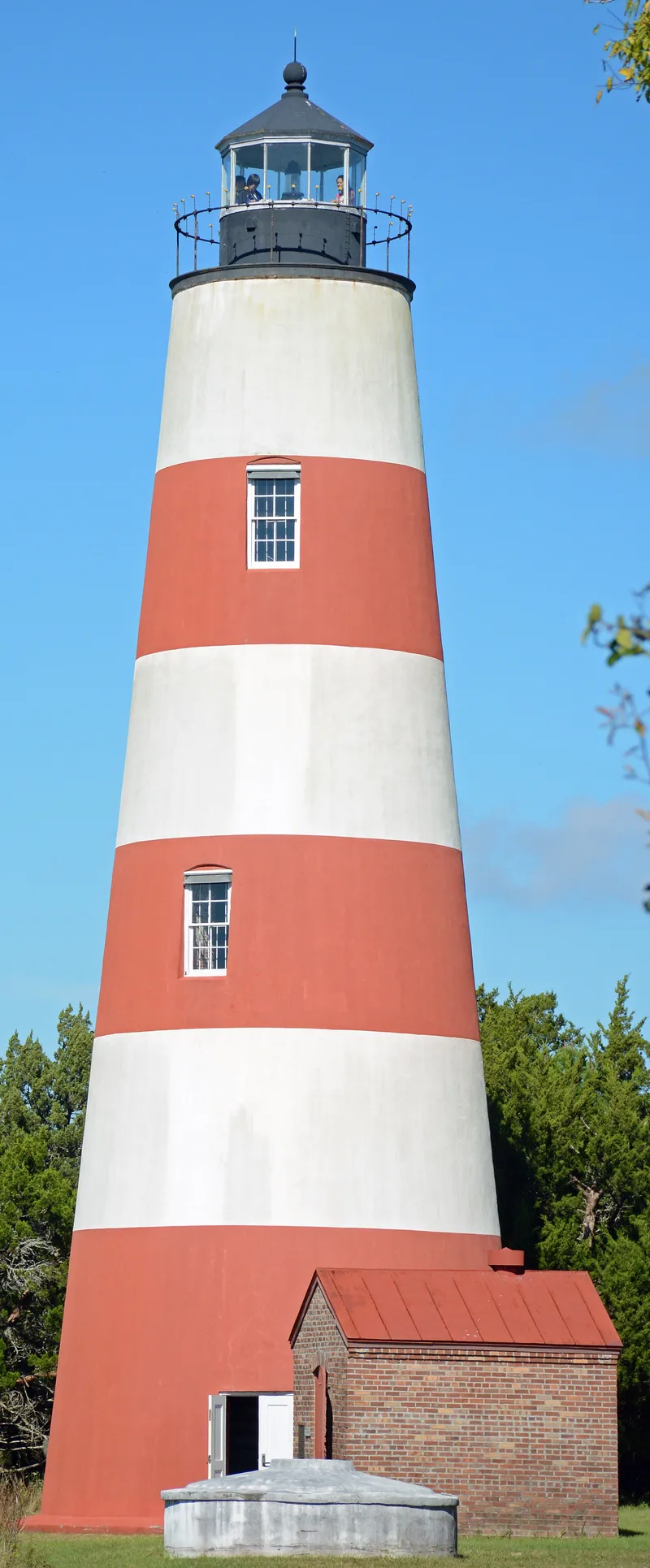
Rising 65 feet above a marshy island at the southern tip of Sapelo Island, this brick lighthouse was built around 1820 to a design by Winslow Lewis. Its tapered cylindrical tower, stuccoed exterior, arched openings and cast-iron lantern make it Georgia's oldest surviving coastal lighthouse. Nearby are a c.1877 iron range beacon with fluted columns and filigree ornament, a brick cistern, the ruins of an 1890 oil house, footings of a 1905 steel tower, and a foundation from a Spanish-American War fortification. The complex marked the coastal entrance to the port of Darien, which shipped rice, cotton, timber and naval stores. The tower was deactivated after the 1898 hurricane, but it continued as a daymark until the whole station closed in 1933. It was listed for its role in maritime transportation, its architecture, and the archaeological potential of the surrounding island, a state-owned tract with a later causeway.
Machine-generated summary. This summary was generated by a language model from the official nomination document and has not been reviewed line by line by an editor. It may contain errors. Check the source document before relying on any detail. Source: nomination document (PDF) · catalog entry. Generated October 2026 (model claude-sonnet-5-5, prompt v1.0-2026-10-29).
| Period of significance | 1820-1933 |
|---|---|
| Styles | No style |
| Areas of significance | Architecture, Transportation |
| Acreage | 205.9 |
| Boundary source | NPS cultural-resource GIS polygon |
| Full listing page | Sapelo Island Lighthouse (property record) |
What listing means for this property
This is a historic district. Buildings within its boundary are either contributing (they add to the district's significance) or non-contributing. Owners of contributing income-producing buildings can claim the 20% federal rehabilitation tax credit; homeowners should look at state credits. National Register districts impose no design review by themselves; a local historic district ordinance, if one exists, does (the difference explained).
General information, not legal or tax advice. Rules change; confirm with your State Historic Preservation Office or a qualified adviser.