Roscoe-Dunaway Gardens Historic District
Why it's listed
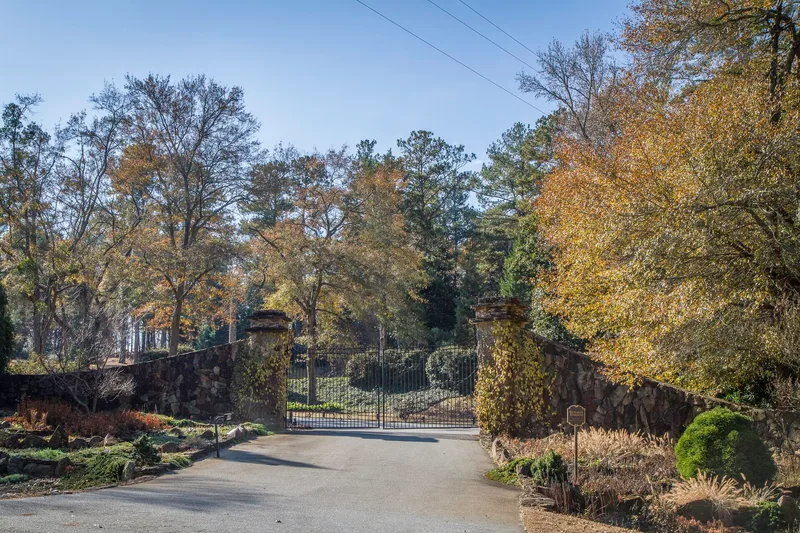
Roscoe-Dunaway Gardens is a rural district in northern Coweta County, Georgia, made up of the crossroads community of Roscoe, surrounding farmsteads, and a designed garden. Roscoe received a post office in 1882 and has houses from the late 19th and early 20th centuries arranged around an irregular road pattern. Nearby farms include an antebellum I-house, tenant houses, large barns, family cemeteries, and Andrews Chapel, a church with two towers. The district is recognized for its architecture, farming heritage, community development, and tenant farming, much of it by African-American farmers. Dunaway Gardens, begun in the mid-1920s by Hettie Jane Dunaway Sewell with Atlanta landscape firm Cagle and Monroe, features terraces, rock walls, pools and an amphitheater built largely by local labor. It served as a base for Chautauqua-style productions across the Southeast and opened in 1934. Today the gardens are overgrown, though much stonework survives.
Machine-generated summary. This summary was generated by a language model from the official nomination document and has not been reviewed line by line by an editor. It may contain errors. Check the source document before relying on any detail. Source: nomination document (PDF) · catalog entry. Generated October 2026 (model claude-sonnet-5-5, prompt v1.0-2026-10-29).
| Period of significance | c.1830-1946 |
|---|---|
| Styles | Late Victorian/Queen Anne; Bungalow/Craftsman; Plantation Plain; I-House; Georgian cottage; Folk Victorian; Saddlebag; Double-pen; New South cottage; Central Hallway; Hall-parlor |
| Areas of significance | Architecture, Agriculture, Community Planning and Development, Landscape Architecture, Entertainment/Recreation, Black |
| Acreage | 4500 |
| Boundary source | NPS cultural-resource GIS polygon |
| Full listing page | Roscoe-Dunaway Gardens Historic District (property record) |
What listing means for this property
This is a historic district. Buildings within its boundary are either contributing (they add to the district's significance) or non-contributing. Owners of contributing income-producing buildings can claim the 20% federal rehabilitation tax credit; homeowners should look at state credits. National Register districts impose no design review by themselves; a local historic district ordinance, if one exists, does (the difference explained).
General information, not legal or tax advice. Rules change; confirm with your State Historic Preservation Office or a qualified adviser.