Rocksprings Shotgun Row Historic District

The National Park Service has not published a boundary polygon for this district; the map shows the listed properties inside it and the district's reference point.
Why it's listed
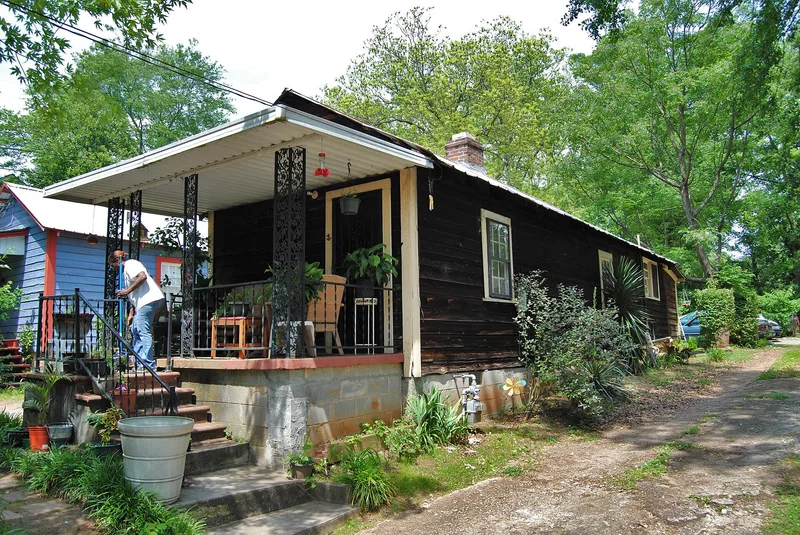
Six small shotgun houses stand side by side along Rocksprings Street in Athens, Georgia, all built around 1925. Each is one story, one room wide and about three rooms deep, with a front-gable metal roof, weatherboard siding, a simple shed porch and original six-over-six windows. Inside, tongue-and-groove boards cover the walls and ceilings, and plain mantels and moldings survive. Small rear or side additions mostly hold bathrooms. The houses were built from inexpensive materials to shelter low-income Black laborers, likely including domestic workers for the grand homes along nearby Milledge Avenue. A 1926 Sanborn map places the row near African-American churches. The row is the only intact cluster of shotgun houses left in an area that has changed dramatically. Only 55 shotgun or double-shotgun buildings turned up among 1,600 surveyed properties in Athens-Clarke County, so the group was listed for its architecture and its link to the city's African-American working-class history.
Machine-generated summary. This summary was generated by a language model from the official nomination document and has not been reviewed line by line by an editor. It may contain errors. Check the source document before relying on any detail. Source: nomination document (PDF) · catalog entry. Generated October 2026 (model claude-sonnet-5-5, prompt v1.0-2026-10-29).
| Period of significance | c.1925 |
|---|---|
| Styles | No Style: Vernacular (shotgun house type) |
| Areas of significance | Architecture, Black |
| Acreage | 1 |
| Boundary source | not published |
| Full listing page | Rocksprings Shotgun Row Historic District (property record) |
What listing means for this property
This is a historic district. Buildings within its boundary are either contributing (they add to the district's significance) or non-contributing. Owners of contributing income-producing buildings can claim the 20% federal rehabilitation tax credit; homeowners should look at state credits. National Register districts impose no design review by themselves; a local historic district ordinance, if one exists, does (the difference explained).
General information, not legal or tax advice. Rules change; confirm with your State Historic Preservation Office or a qualified adviser.