Ringgold Commercial Historic District

The National Park Service has not published a boundary polygon for this district; the map shows the listed properties inside it and the district's reference point.
Why it's listed
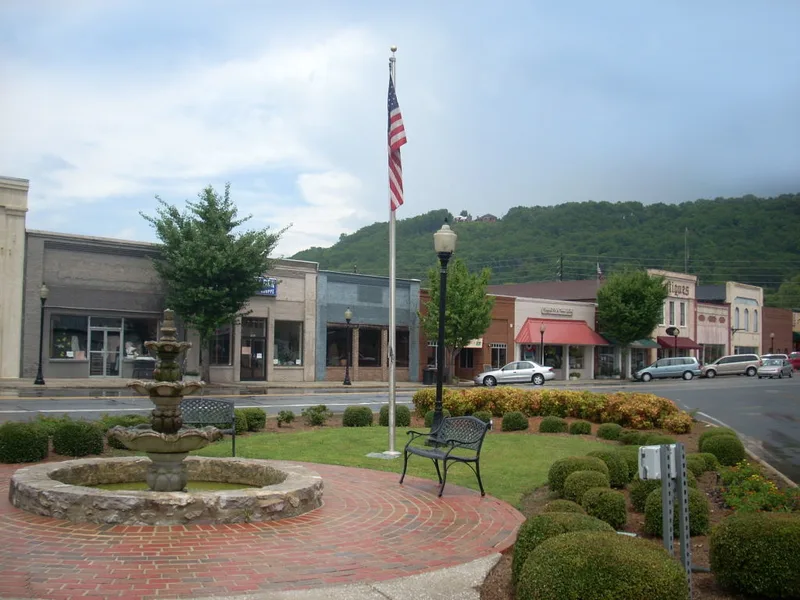
Seven attached commercial buildings along Nashville Street, Ringgold's main street, make up this small downtown district in northwest Georgia. Three two-story stuccoed brick buildings, the Whitman Block, the McClain store and the Whitsett building, date from the 1860s and show Greek Revival influences such as pilasters and stone lintels. Four one-story brick buildings from 1917 to 1926 reflect a stripped classical approach, with brick corbeling and recessed panels. The buildings housed groceries, a drugstore, a bank, a shirt factory, the first telephone system and, from 1939 to 1959, the post office. Ringgold grew as a railroad town, was burned during the Civil War, and slowly rebuilt. The district was listed for its architecture and for its role in the town's commercial life. The mid-19th-century buildings are noted as unusual survivors in Georgia. Ringgold's historic downtown elsewhere has been lost or altered, leaving this block as the main surviving group.
Machine-generated summary. This summary was generated by a language model from the official nomination document and has not been reviewed line by line by an editor. It may contain errors. Check the source document before relying on any detail. Source: nomination document (PDF) · catalog entry. Generated October 2026 (model claude-sonnet-5-5, prompt v1.0-2026-10-29).
| Period of significance | C. 1860-1941 |
|---|---|
| Styles | Mid-19th Century: Greek Revival; Other: Stripped Classical |
| Areas of significance | Commerce, Architecture, Communications |
| Acreage | 0.9 |
| Boundary source | not published |
| Full listing page | Ringgold Commercial Historic District (property record) |
What listing means for this property
This is a historic district. Buildings within its boundary are either contributing (they add to the district's significance) or non-contributing. Owners of contributing income-producing buildings can claim the 20% federal rehabilitation tax credit; homeowners should look at state credits. National Register districts impose no design review by themselves; a local historic district ordinance, if one exists, does (the difference explained).
General information, not legal or tax advice. Rules change; confirm with your State Historic Preservation Office or a qualified adviser.