Pine Log Methodist Church, Campground, and Cemetery

Why it's listed
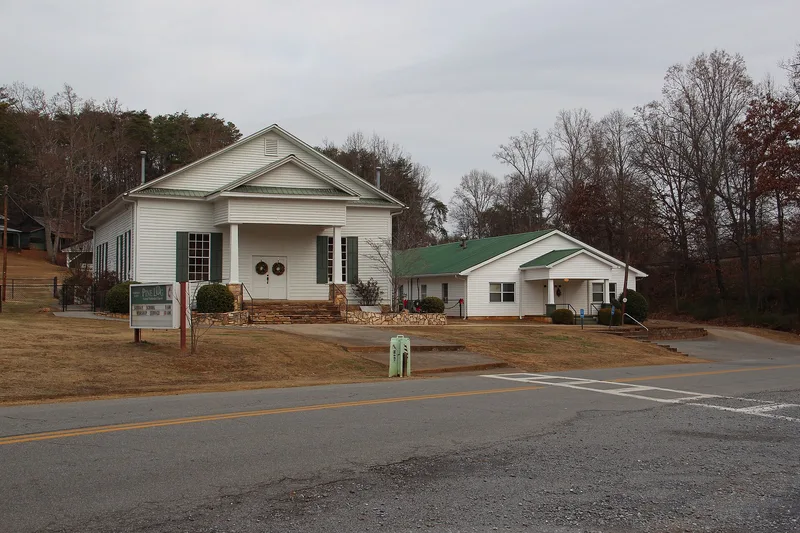
Pine Log Methodist Church, Campground, and Cemetery form a ten-acre rural district in a small valley of Bartow County in northwest Georgia. The one-story frame church dates from 1842, with a portico and gable roof added in 1932. Behind it, the campground centers on an open-sided wooden tabernacle built in 1888, flanked on two sides by twelve unpainted wood-frame cottages known as tents, eleven of them built between 1928 and 1939. A cemetery with more than 800 burials, the earliest from 1851, adjoins the church and includes Cherokee, Black and white settler graves. The district was listed for its role in frontier and rural religious and social life, since annual August camp meetings have drawn Methodists here since the 1840s, and as a representative example of a Georgia camp meeting ground with its church and churchyard cemetery. Its period of significance runs from 1842 to 1939, and the camp meeting remains an annual event.
Machine-generated summary. This summary was generated by a language model from the official nomination document and has not been reviewed line by line by an editor. It may contain errors. Check the source document before relying on any detail. Source: nomination document (PDF) · catalog entry. Generated October 2026 (model claude-sonnet-5-5, prompt v1.0-2026-10-29).
| Period of significance | 1842-1939 |
|---|---|
| Areas of significance | Architecture, Religion, Social History |
| Acreage | 10 |
| Boundary source | NPS cultural-resource GIS polygon |
| Full listing page | Pine Log Methodist Church, Campground, and Cemetery (property record) |
What listing means for this property
This is a historic district. Buildings within its boundary are either contributing (they add to the district's significance) or non-contributing. Owners of contributing income-producing buildings can claim the 20% federal rehabilitation tax credit; homeowners should look at state credits. National Register districts impose no design review by themselves; a local historic district ordinance, if one exists, does (the difference explained).
General information, not legal or tax advice. Rules change; confirm with your State Historic Preservation Office or a qualified adviser.