Peachtree Highlands-Peachtree Park Historic District

Why it's listed
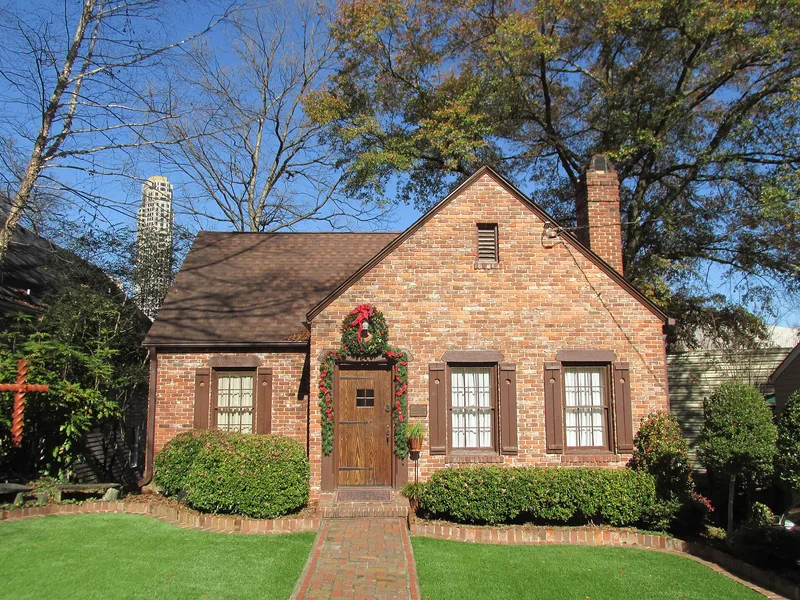
This neighborhood in Atlanta's Buckhead area contains about 380 contributing buildings, mostly modest single-family houses built between 1921 and 1958. Development began with Peachtree Highlands, platted by the McKenzie Trust Company and aimed at working families, then continued south as Peachtree Park under the developer Haas & Dodd. Streets curve with the rolling terrain, and granite stones line many of them. Lots are deep and narrow, with mature trees and informal landscaping. Common house types include bungalows, English cottages, side-gabled cottages, American Small Houses and ranch houses, with Craftsman, Colonial Revival and Tudor Revival influences. Some houses came from pattern books, catalogs or prefabricated kits. The northern half mostly predates 1945 and the southern half mostly follows it. The district reflects Atlanta's rapid growth in the early twentieth century, when streetcar lines and automobiles pushed residential development northward, and it remains a quiet residential area beside busy roads, malls and offices.
Machine-generated summary. This summary was generated by a language model from the official nomination document and has not been reviewed line by line by an editor. It may contain errors. Check the source document before relying on any detail. Source: nomination document (PDF) · catalog entry. Generated October 2026 (model claude-sonnet-5-5, prompt v1.0-2026-10-29).
| Period of significance | 1921-1958 |
|---|---|
| Styles | Colonial Revival, Classical Revival, Tudor Revival, Bungalow/Craftsman, side-gabled cottage, American Small House, Ranch |
| Areas of significance | Architecture, Community Planning and Development |
| Acreage | 200 |
| Boundary source | NPS cultural-resource GIS polygon |
| Full listing page | Peachtree Highlands-Peachtree Park Historic District (property record) |
What listing means for this property
This is a historic district. Buildings within its boundary are either contributing (they add to the district's significance) or non-contributing. Owners of contributing income-producing buildings can claim the 20% federal rehabilitation tax credit; homeowners should look at state credits. National Register districts impose no design review by themselves; a local historic district ordinance, if one exists, does (the difference explained).
General information, not legal or tax advice. Rules change; confirm with your State Historic Preservation Office or a qualified adviser.