Pasaquan

Why it's listed
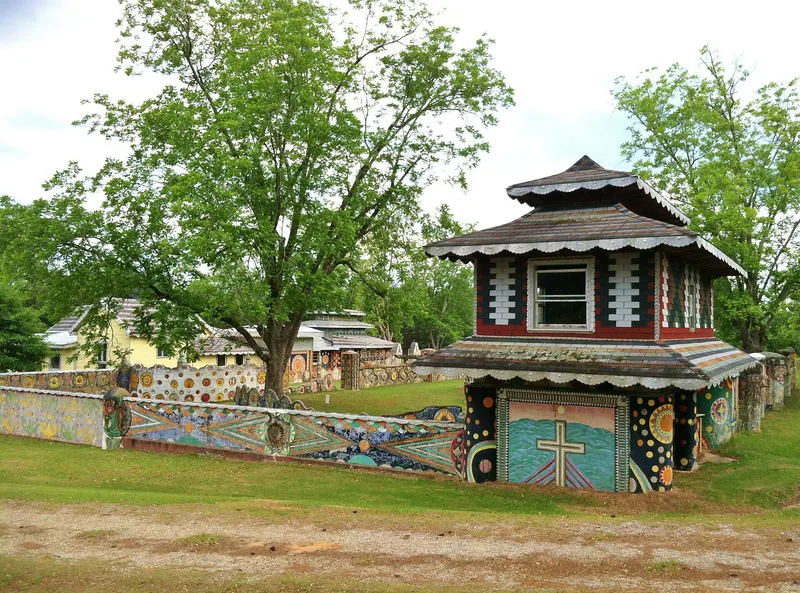
Pasaquan is a visionary-art environment on seven acres of sandy, pine-surrounded land near Buena Vista, Georgia. Beginning in 1959, self-taught artist Eddie Owens Martin, known as St. EOM, transformed an 1880s farmhouse and the surrounding family farm into a compound of painted concrete walls, totems, mandalas and buildings. The complex includes the enlarged farmhouse with a circular temple, a Kiva, a garage, a Pagoda and a Studio, all linked by colorful walls and sculptures. Martin decorated surfaces with oil paint and with hammered, scalloped metal trim, and the site holds over 2,000 works of art and craft. The nomination presents Pasaquan as a nationally significant example of 20th-century visionary art, tied to Martin's religious beliefs and Southern origins. It is recognized for his artistic reputation, for the quality of its construction and color, and for an unusually intact condition compared with similar sites. Today it serves as a museum and work of art.
Machine-generated summary. This summary was generated by a language model from the official nomination document and has not been reviewed line by line by an editor. It may contain errors. Check the source document before relying on any detail. Source: nomination document (PDF) · catalog entry. Generated October 2026 (model claude-sonnet-5-5, prompt v1.0-2026-10-29).
| Styles | No style |
|---|---|
| Areas of significance | Architecture, Art, Religion |
| Acreage | 7 |
| Boundary source | NPS cultural-resource GIS polygon |
| Full listing page | Pasaquan (property record) |
What listing means for this property
This is a historic district. Buildings within its boundary are either contributing (they add to the district's significance) or non-contributing. Owners of contributing income-producing buildings can claim the 20% federal rehabilitation tax credit; homeowners should look at state credits. National Register districts impose no design review by themselves; a local historic district ordinance, if one exists, does (the difference explained).
General information, not legal or tax advice. Rules change; confirm with your State Historic Preservation Office or a qualified adviser.