Paradise Park Historic District (Boundary Increase)

Why it's listed
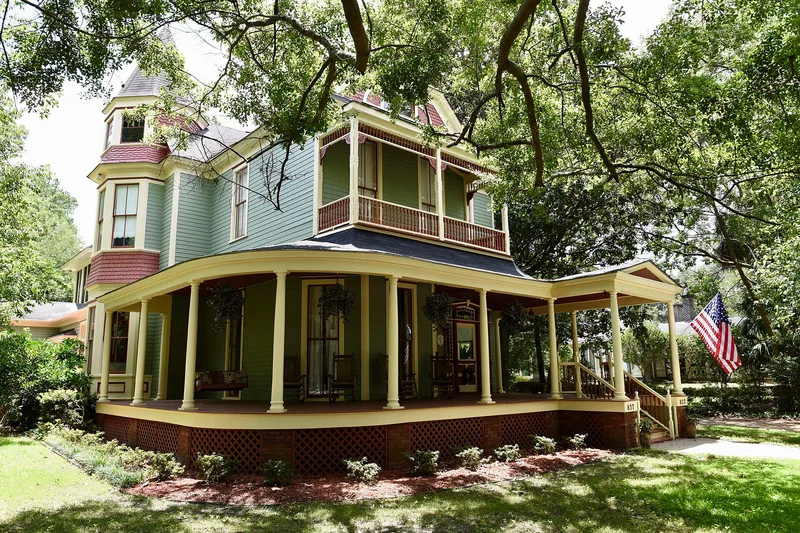
Paradise Park is a residential neighborhood southeast of downtown Thomasville, Georgia, laid out around a triangular landscaped park with curving streets, large lots and oak-lined avenues. Listed in 1984, the district was amended in 2002 to add two houses. The Neel House at 502 South Broad Street, built in 1907, is a two-story Neoclassical Revival dwelling with a full-height columned portico. It was left out of the first listing because of the owner's objection. The Tuck House at 701 South Broad Street, built in 1940 to designs by local architect Roderick Brantley, is a one-story brick-veneer ranch house with Greek Revival details and a camellia garden. It was previously excluded because of its age. The neighborhood was a retreat for wealthy northern families, especially from Cleveland, and was locally called Yankee Paradise. Including the 1940 house extends the period of significance to the end of the area's development, which was complete by World War II.
Machine-generated summary. This summary was generated by a language model from the official nomination document and has not been reviewed line by line by an editor. It may contain errors. Check the source document before relying on any detail. Source: nomination document (PDF) · catalog entry. Generated October 2026 (model claude-sonnet-5-5, prompt v1.0-2026-10-29).
| Period of significance | mid-1880s to 1940 (district as amended) |
|---|---|
| Styles | Late 19th and 20th Century Revivals/Classical Revival/Neoclassical Revival; Modern Movement/Ranch Style |
| Areas of significance | Architecture, Community Planning and Development, Entertainment/Recreation, Landscape Architecture |
| Acreage | 0.9 |
| Boundary source | NPS cultural-resource GIS polygon |
| Full listing page | Paradise Park Historic District (Boundary Increase) (property record) |
What listing means for this property
This is a historic district. Buildings within its boundary are either contributing (they add to the district's significance) or non-contributing. Owners of contributing income-producing buildings can claim the 20% federal rehabilitation tax credit; homeowners should look at state credits. National Register districts impose no design review by themselves; a local historic district ordinance, if one exists, does (the difference explained).
General information, not legal or tax advice. Rules change; confirm with your State Historic Preservation Office or a qualified adviser.