Paradise Park Historic District

Why it's listed
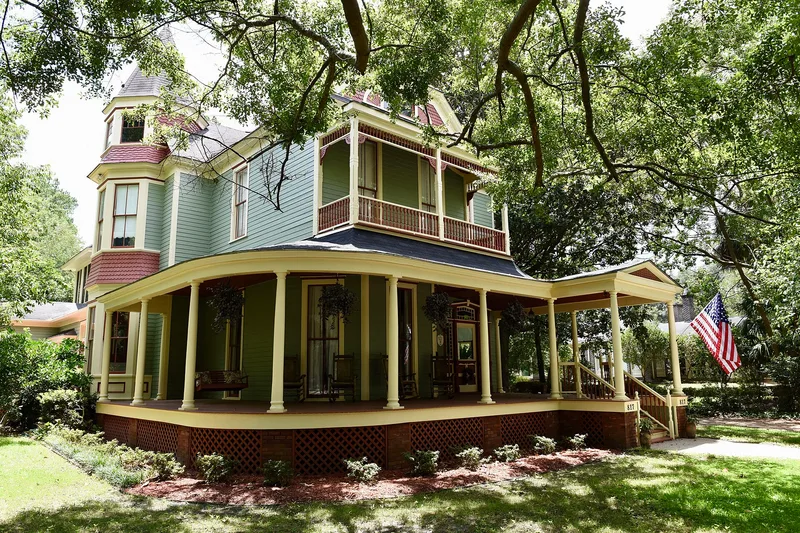
Paradise Park Historic District covers about 37 acres southeast of downtown Thomasville, Georgia, centered on a triangular park with pines, mossy oaks, palms and magnolias. Around it stand large wood-framed houses in Victorian Eclectic, Neoclassical, Colonial Revival and Craftsman/Bungalow styles, many with Ionic columns, pediments and Palladian windows. The neighborhood grew in the early 1890s after the estate of S. Alexander Smith was divided, and its radiating streets contrast with the city's original grid. Prominent winter residents bought large lots facing the park, including a furniture merchant, a cigar company president, a Philadelphia lumber magnate and a clothing distributor, leading locals to call the area "Yankee Paradise." Builders James Gribben and William Miller constructed the Strawbridge and Hebard houses around 1899. The park, deeded to the city in 1889, is Thomasville's largest historic park. The district was recognized for its architecture, planned suburban development, landscape and local history.
Machine-generated summary. This summary was generated by a language model from the official nomination document and has not been reviewed line by line by an editor. It may contain errors. Check the source document before relying on any detail. Source: nomination document (PDF) · catalog entry. Generated October 2026 (model claude-sonnet-5-5, prompt v1.0-2026-10-29).
| Period of significance | mid-1880s/early 1900s |
|---|---|
| Styles | Victorian Eclectic, Neoclassical, Colonial Revival, Craftsman/Bungalow |
| Areas of significance | Community Planning and Development, Landscape Architecture, Architecture |
| Acreage | 37 |
| Boundary source | NPS cultural-resource GIS polygon |
| Full listing page | Paradise Park Historic District (property record) |
What listing means for this property
This is a historic district. Buildings within its boundary are either contributing (they add to the district's significance) or non-contributing. Owners of contributing income-producing buildings can claim the 20% federal rehabilitation tax credit; homeowners should look at state credits. National Register districts impose no design review by themselves; a local historic district ordinance, if one exists, does (the difference explained).
General information, not legal or tax advice. Rules change; confirm with your State Historic Preservation Office or a qualified adviser.