Oglethorpe Avenue Historic District

Why it's listed
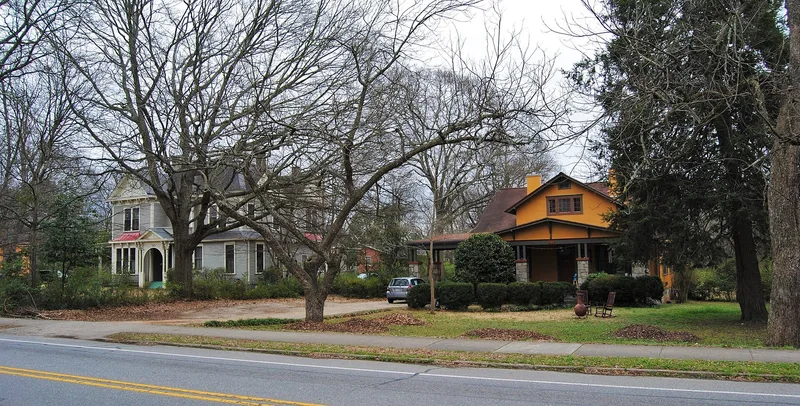
Oglethorpe Avenue in Athens, Georgia, is a curving, tree-shaded street lined with one- and two-story houses from around 1900, in Victorian eclectic, Craftsman and Bungalow styles. To the north lies the former State Normal School campus, now a Navy supply school, with Neoclassical brick buildings set among lawns, oaks and brick entrance posts. The school opened under state authority in 1891 as the second of four Georgia normal schools, created to train new teachers and improve the skills of working ones. Surviving campus buildings include Winnie Davis Hall (1902), Rhodes Hall (1906), the Carnegie Library (1910), and Miller and Pound Halls (1917), designed by architects from Augusta, Atlanta, New York and West Virginia. The district was listed for its educational role and its range of architecture. It also preserves the homes of Athens business and civic figures, a historic brick service station now used as a bakery, and 44 contributing buildings.
Machine-generated summary. This summary was generated by a language model from the official nomination document and has not been reviewed line by line by an editor. It may contain errors. Check the source document before relying on any detail. Source: nomination document (PDF) · catalog entry. Generated October 2026 (model claude-sonnet-5-5, prompt v1.0-2026-10-29).
| Period of significance | 1891-1932 |
|---|---|
| Styles | Victorian eclectic, Neoclassical, Bungalow, Craftsman |
| Areas of significance | Education, Architecture |
| Acreage | 41 |
| Boundary source | NPS cultural-resource GIS polygon |
| Full listing page | Oglethorpe Avenue Historic District (property record) |
What listing means for this property
This is a historic district. Buildings within its boundary are either contributing (they add to the district's significance) or non-contributing. Owners of contributing income-producing buildings can claim the 20% federal rehabilitation tax credit; homeowners should look at state credits. National Register districts impose no design review by themselves; a local historic district ordinance, if one exists, does (the difference explained).
General information, not legal or tax advice. Rules change; confirm with your State Historic Preservation Office or a qualified adviser.