North Highlands Historic District

Why it's listed
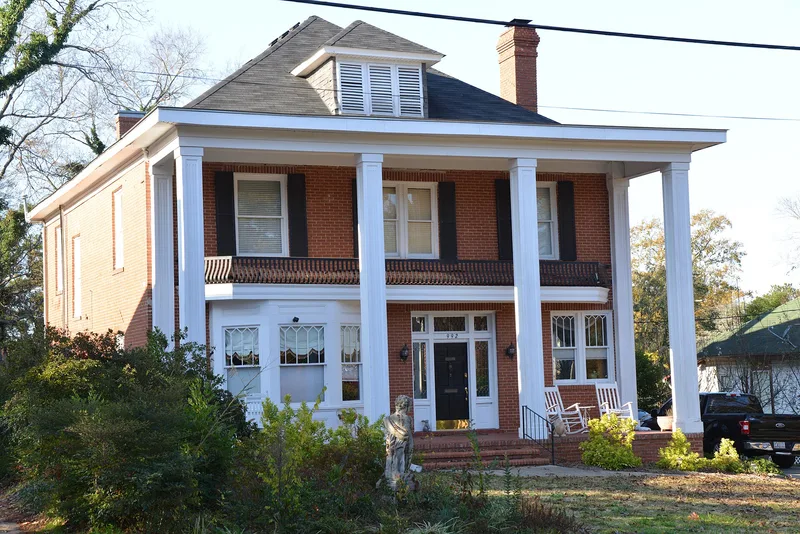
North Highlands is a residential neighborhood in Macon, Georgia, on a high bluff east of the Ocmulgee River, about a mile from the central business district. It grew from the 1890s into the early 1940s on land once part of the Melrose family plantation, later bought by Senator A. O. Bacon and developed in stages. The district contains 240 contributing buildings, mostly houses, including the ca. 1850 Melrose House at its center. Older, larger wood-frame homes along North Avenue show Queen Anne, Shingle, Colonial Revival and Neoclassical Revival styles, while newer sections hold smaller Craftsman and English Vernacular Revival houses. Restrictive covenants controlled the size, cost and setback of dwellings, and hexagonal-paver sidewalks and mature trees remain. Growth peaked between 1920 and 1925. The neighborhood was listed for its illustration of suburban planning and development and for its varied, well-preserved architecture. One small frame general store is the only historic non-residential building.
Machine-generated summary. This summary was generated by a language model from the official nomination document and has not been reviewed line by line by an editor. It may contain errors. Check the source document before relying on any detail. Source: nomination document (PDF) · catalog entry. Generated October 2026 (model claude-sonnet-5-5, prompt v1.0-2026-10-29).
| Period of significance | ca. 1850-1941 |
|---|---|
| Styles | Queen Anne, Neoclassical Revival, Colonial Revival, Tudor Revival, English Vernacular Revival, Shingle Style, Bungalow/Craftsman |
| Areas of significance | Architecture, Community Planning and Development |
| Acreage | 130 |
| Boundary source | NPS cultural-resource GIS polygon |
| Full listing page | North Highlands Historic District (property record) |
What listing means for this property
This is a historic district. Buildings within its boundary are either contributing (they add to the district's significance) or non-contributing. Owners of contributing income-producing buildings can claim the 20% federal rehabilitation tax credit; homeowners should look at state credits. National Register districts impose no design review by themselves; a local historic district ordinance, if one exists, does (the difference explained).
General information, not legal or tax advice. Rules change; confirm with your State Historic Preservation Office or a qualified adviser.