North College Street Residential Historic District

Why it's listed
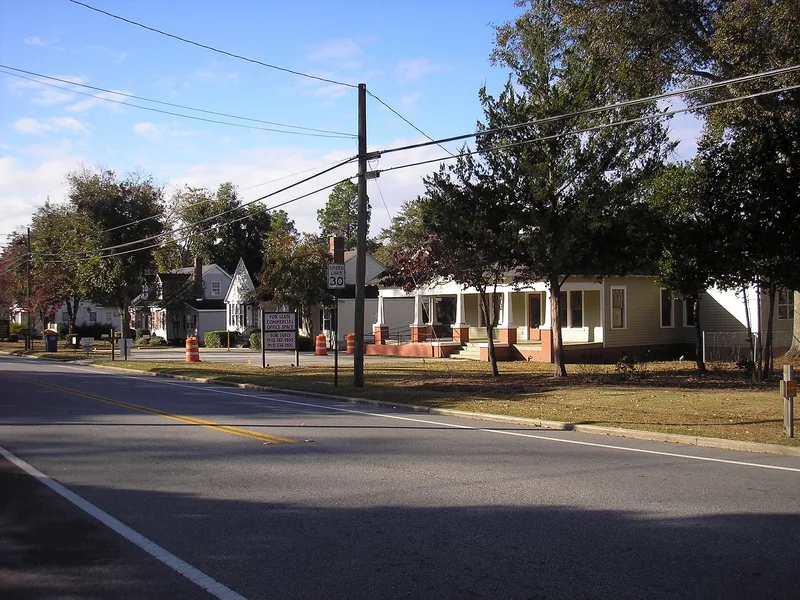
North College Street in northwest Statesboro is lined with a neighborhood of modest houses built between 1922 and 1930. The district covers about 13 acres and holds 24 contributing buildings plus two later houses from the 1940s. Most are one- or one-and-a-half-story Craftsman bungalows with multi-gabled roofs, weatherboard siding, exposed rafter ends, and porches on tapered wooden columns set on brick piers. A few have hipped roofs, and brick appears as both a decorative and structural material. Mature oaks and pines shade the street, and yards are informally landscaped with azaleas and crepe myrtles. Early residents included a dentist, a hardware store owner, a barber, a mail carrier, and a Coca-Cola bottling manager, many of whom walked to work downtown. The district was listed for architecture because it is the largest concentration of small-town bungalow housing in Statesboro and has kept its historic character, though some houses are now rentals or businesses.
Machine-generated summary. This summary was generated by a language model from the official nomination document and has not been reviewed line by line by an editor. It may contain errors. Check the source document before relying on any detail. Source: nomination document (PDF) · catalog entry. Generated October 2026 (model claude-sonnet-5-5, prompt v1.0-2026-10-29).
| Period of significance | 1922-1930 |
|---|---|
| Styles | Bungalow/Craftsman; Colonial Revival |
| Areas of significance | Architecture |
| Acreage | 13 |
| Boundary source | NPS cultural-resource GIS polygon |
| Full listing page | North College Street Residential Historic District (property record) |
What listing means for this property
This is a historic district. Buildings within its boundary are either contributing (they add to the district's significance) or non-contributing. Owners of contributing income-producing buildings can claim the 20% federal rehabilitation tax credit; homeowners should look at state credits. National Register districts impose no design review by themselves; a local historic district ordinance, if one exists, does (the difference explained).
General information, not legal or tax advice. Rules change; confirm with your State Historic Preservation Office or a qualified adviser.