Nacoochee Valley

Why it's listed
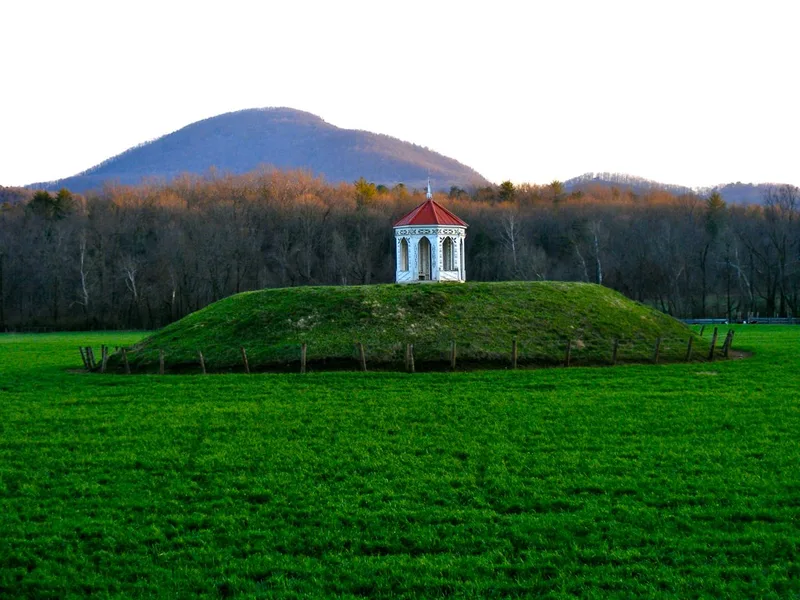
Nacoochee Valley is a roughly 2,500-acre district in White County, Georgia, enclosed by Mount Yonah and Sal Mountain, where the Chattahoochee River begins to take shape. Open floodplain fields have been farmed since the early 1800s, and a 17-foot Indian mound marks far older occupation. Settlers arrived in the 1820s and left plain-style homesteads such as the Richardson-Lumsden House. Later came summer-resort homes, including the Italianate Villa called West End, built by Frederick Nichols and later occupied by Governor L.G. Hardman, and the carpenter Gothic Mountain Home of 1876. Churches, a school, the Sautee Store, Nora Mills, a railroad depot and a brick commercial block reflect the valley's commerce and transportation. Placer gold pits, mill ruins and timbering scars record its industry. Of 68 structures, 27 older ones contribute to the district. The valley was listed for its architecture, landscape, agriculture, settlement history and archaeology, and it represents the broader development of the Georgia mountains.
Machine-generated summary. This summary was generated by a language model from the official nomination document and has not been reviewed line by line by an editor. It may contain errors. Check the source document before relying on any detail. Source: nomination document (PDF) · catalog entry. Generated October 2026 (model claude-sonnet-5-5, prompt v1.0-2026-10-29).
| Styles | Plain-style, Italianate Villa, early Gothic Revival, carpenter Gothic, and bungalow |
|---|---|
| Areas of significance | Industry, Prehistoric, Landscape Architecture, Commerce, Agriculture, Historic - Non-Aboriginal, Transportation, Education, Exploration/Settlement, Architecture |
| Acreage | 2500 |
| Boundary source | NPS cultural-resource GIS polygon |
| Full listing page | Nacoochee Valley (property record) |
What listing means for this property
This is a historic district. Buildings within its boundary are either contributing (they add to the district's significance) or non-contributing. Owners of contributing income-producing buildings can claim the 20% federal rehabilitation tax credit; homeowners should look at state credits. National Register districts impose no design review by themselves; a local historic district ordinance, if one exists, does (the difference explained).
General information, not legal or tax advice. Rules change; confirm with your State Historic Preservation Office or a qualified adviser.