Mount Pleasant Historic District

Why it's listed
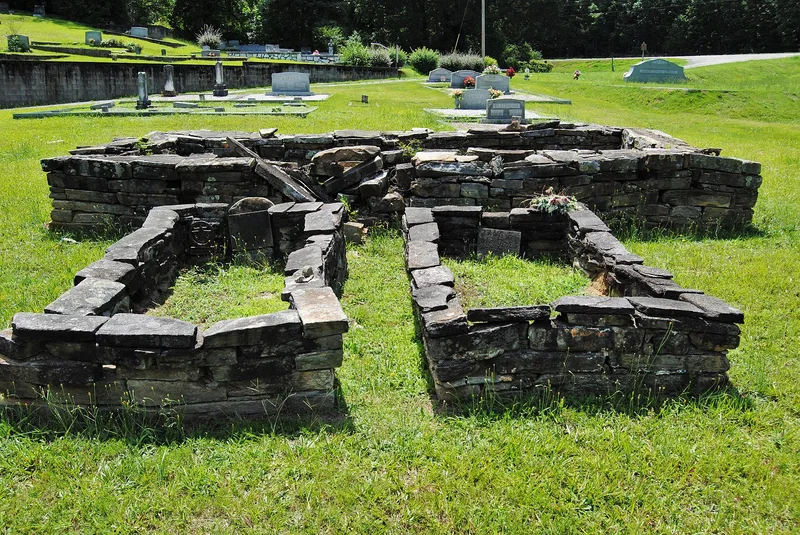
Mount Pleasant Historic District is a rural linear community strung along the Old Federal Road in Banks County, Georgia. It covers about 237 acres and holds farm complexes, barns, a church, a cemetery, a c.1935 store and service station, and a small voting place. The farmhouses include a c.1890 I-house, a c.1900 central hallway house and a c.1916 Georgian cottage. Mount Pleasant Methodist Church, a front-gabled wooden building finished in 1892, is the focus of the community. The congregation dates to the late 1700s and met in three log buildings before the present church. The cemetery, begun in 1829, holds house tombs and a Revolutionary War veteran's grave. The district is recognized for its vernacular architecture, its small subsistence farms growing corn, wheat and some cotton, and its development around the church and camp meeting ground. The boll weevil and the Depression drove many residents away, and many early buildings were lost, but the surviving resources still represent the community.
Machine-generated summary. This summary was generated by a language model from the official nomination document and has not been reviewed line by line by an editor. It may contain errors. Check the source document before relying on any detail. Source: nomination document (PDF) · catalog entry. Generated October 2026 (model claude-sonnet-5-5, prompt v1.0-2026-10-29).
| Period of significance | C. 1829-1946 |
|---|---|
| Styles | Georgian Cottage; I-House (classified as Other) |
| Areas of significance | Architecture, Agriculture, Community Planning and Development |
| Acreage | 237 |
| Boundary source | NPS cultural-resource GIS polygon |
| Full listing page | Mount Pleasant Historic District (property record) |
What listing means for this property
This is a historic district. Buildings within its boundary are either contributing (they add to the district's significance) or non-contributing. Owners of contributing income-producing buildings can claim the 20% federal rehabilitation tax credit; homeowners should look at state credits. National Register districts impose no design review by themselves; a local historic district ordinance, if one exists, does (the difference explained).
General information, not legal or tax advice. Rules change; confirm with your State Historic Preservation Office or a qualified adviser.