Midway Historic District

Why it's listed
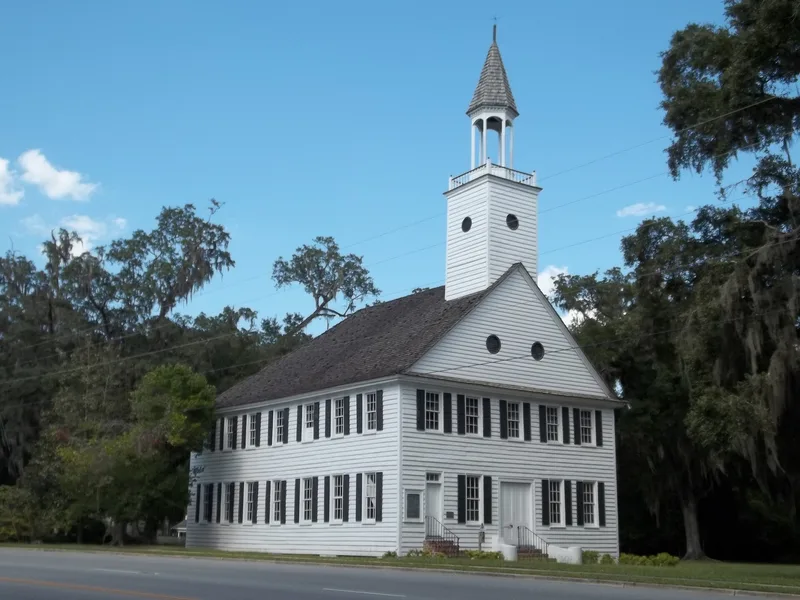
Midway Historic District is a small cluster of resources at the crossing of US Highway 17 and Georgia Highway 38 in Liberty County. It includes Midway Church, completed in 1792 on the site of an earlier meeting house burned by the British in 1778, and a cemetery laid out about 1756 and enclosed by a brick wall. A live-oak-lined stretch of the Old Sunbury Road and the Midway Museum, built in 1959 from research on colonial low-country cottages, complete the district. Settlers from Dorchester, South Carolina, organized the Midway Society in 1754, and the community grew wealthy on rice and indigo. Residents were active advocates of independence, and the area produced Lyman Hall and Button Gwinnett, two Georgia signers of the Declaration of Independence. The Civil War left the community unable to recover, and little of it remains beyond these resources. The district was recognized for its religious, political and architectural importance and as the symbolic center of a nearly vanished community.
Machine-generated summary. This summary was generated by a language model from the official nomination document and has not been reviewed line by line by an editor. It may contain errors. Check the source document before relying on any detail. Source: nomination document (PDF) · catalog entry. Generated October 2026 (model claude-sonnet-5-5, prompt v1.0-2026-10-29).
| Styles | Protestant meeting house resembling a New England meeting house; museum designed as an 18th-century Georgia low-country raised cottage |
|---|---|
| Areas of significance | Commerce, Politics/Government, Architecture, Religion |
| Acreage | 20 |
| Boundary source | NPS cultural-resource GIS polygon |
| Full listing page | Midway Historic District (property record) |
What listing means for this property
This is a historic district. Buildings within its boundary are either contributing (they add to the district's significance) or non-contributing. Owners of contributing income-producing buildings can claim the 20% federal rehabilitation tax credit; homeowners should look at state credits. National Register districts impose no design review by themselves; a local historic district ordinance, if one exists, does (the difference explained).
General information, not legal or tax advice. Rules change; confirm with your State Historic Preservation Office or a qualified adviser.