Mable, Robert, House and Cemetery

Why it's listed
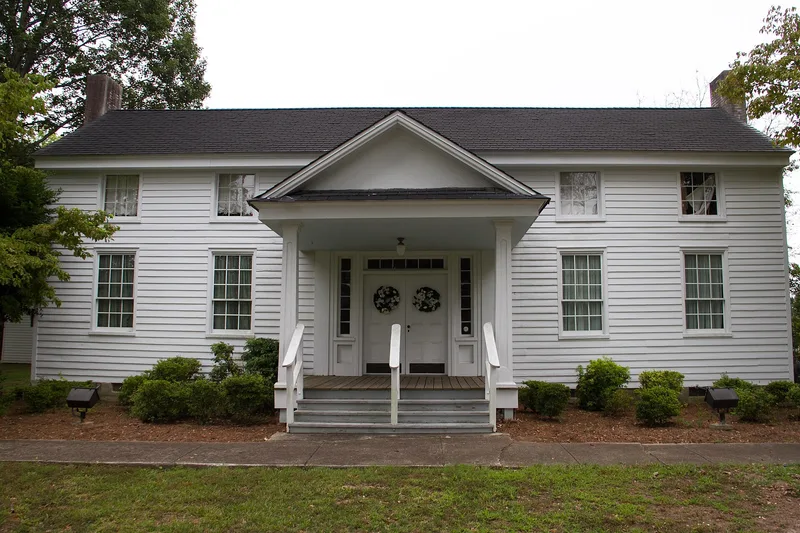
Sixteen acres in Mableton, Cobb County, Georgia, hold the farmstead of Robert Mable, a Scottish-born landholder who built a two-story frame house there in 1843. The house follows the Plantation Plain, or I-house, form, with a central hall, four end chimneys, a pedimented porch and heart pine construction joined with wooden pegs. Original mantels, doors and windows survive, and large wooden cross bolts still serve as door locks. A smokehouse, a rebuilt kitchen, a historic well and a family cemetery with Mable's grave and those of nine enslaved people complete the farm layout. Mable gave the railroad a right-of-way in 1881, and the stop that followed was named Mableton for him. Federal troops camped on the land in July 1864, and the site later served as a hospital. The property was recognized for its architecture and its intact rural farm setting, with the house now used for offices, gallery space and art classes.
Machine-generated summary. This summary was generated by a language model from the official nomination document and has not been reviewed line by line by an editor. It may contain errors. Check the source document before relying on any detail. Source: nomination document (PDF) · catalog entry. Generated October 2026 (model claude-sonnet-5-5, prompt v1.0-2026-10-29).
| Period of significance | 1843-1885 |
|---|---|
| Styles | Mid-19th Century; Plantation Plain (I-house) |
| Areas of significance | Architecture |
| Acreage | 16 |
| Boundary source | NPS cultural-resource GIS polygon |
| Full listing page | Mable, Robert, House and Cemetery (property record) |
What listing means for this property
This is a historic district. Buildings within its boundary are either contributing (they add to the district's significance) or non-contributing. Owners of contributing income-producing buildings can claim the 20% federal rehabilitation tax credit; homeowners should look at state credits. National Register districts impose no design review by themselves; a local historic district ordinance, if one exists, does (the difference explained).
General information, not legal or tax advice. Rules change; confirm with your State Historic Preservation Office or a qualified adviser.