Low, Juliette Gordon, Historic District

The National Park Service has not published a boundary polygon for this district; the map shows the listed properties inside it and the district's reference point.
Why it's listed
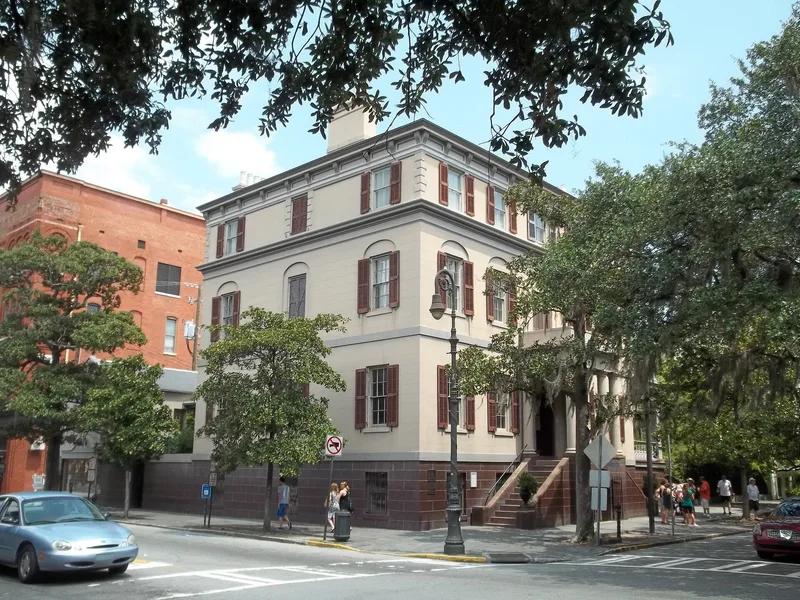
Two Savannah properties make up this landmark, both linked to Juliette Gordon Low, founder of the Girl Scouts in the United States. The Wayne-Gordon House at 10 Oglethorpe Avenue was built between 1818 and 1821 for jurist James Moore Wayne. It later passed to the Gordon family and was her birthplace and childhood home. A brick, stuccoed house, it gained a third floor and a curved east piazza in an 1886 renovation designed by Detlef Lienau. The Girl Scouts bought and restored it in 1953 and opened it to the public in 1956. The second property, at 330 Drayton Street, began as a carriage house and servants' quarters for the Andrew Low House, likely around 1849. In 1912 Low remodeled it as a meeting place for local troops, and she left it to the Savannah Girl Scout council. On March 12, 1912, she organized the first troop with eighteen girls. Membership had grown past 168,000 by her death in 1927.
Machine-generated summary. This summary was generated by a language model from the official nomination document and has not been reviewed line by line by an editor. It may contain errors. Check the source document before relying on any detail. Source: nomination document (PDF) · catalog entry. Generated October 2026 (model claude-sonnet-5-5, prompt v1.0-2026-10-29).
| Period of significance | 1860-1927 |
|---|---|
| Areas of significance | Architecture, Education, Social History |
| Acreage | 0.5 |
| Boundary source | not published |
| Full listing page | Low, Juliette Gordon, Historic District (property record) |
What listing means for this property
This is a historic district. Buildings within its boundary are either contributing (they add to the district's significance) or non-contributing. Owners of contributing income-producing buildings can claim the 20% federal rehabilitation tax credit; homeowners should look at state credits. National Register districts impose no design review by themselves; a local historic district ordinance, if one exists, does (the difference explained).
General information, not legal or tax advice. Rules change; confirm with your State Historic Preservation Office or a qualified adviser.