Linton Historic District

Why it's listed
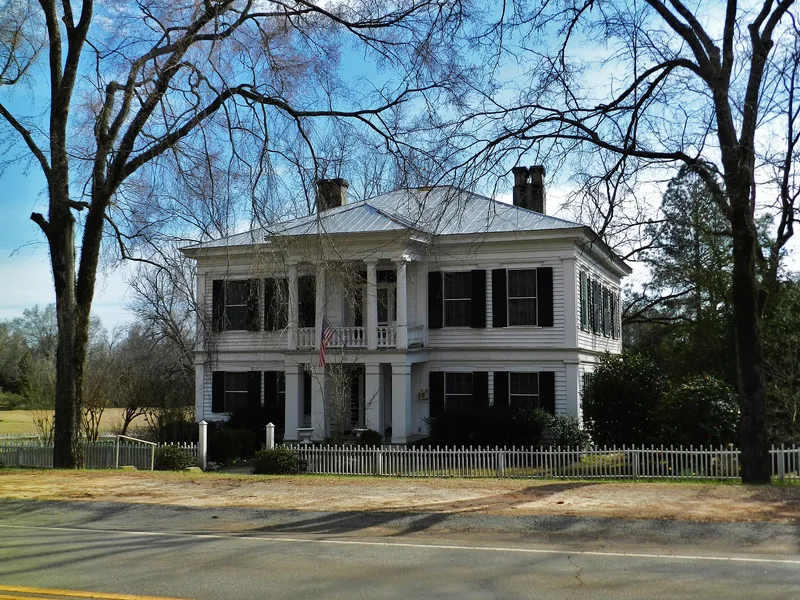
Linton is a small Hancock County, Georgia village laid out along a single one-mile main street lined with cedars and oaks. Founded in 1858 around the Washington Institute, a private Baptist-backed school, it was planned as a town free of the distractions of railroads and liquor. Land was sold to the school in 1857 by Dr. John Stone, and the town took its name from Linton Stephens. Families built houses large enough for boarding students, and these range from raised cottages to Greek Revival, Italianate and Victorian designs, alongside a Methodist church built in 1889-1890 and a store from the 1850s. Twelve long lots were drawn in the original plat. The school burned in 1894, and the town has changed little since. Roughly 365 acres were nominated, including old cemeteries and much of the original plat. The district was recognized for its education history and its well-preserved nineteenth-century architecture.
Machine-generated summary. This summary was generated by a language model from the official nomination document and has not been reviewed line by line by an editor. It may contain errors. Check the source document before relying on any detail. Source: nomination document (PDF) · catalog entry. Generated October 2026 (model claude-sonnet-5-5, prompt v1.0-2026-10-29).
| Period of significance | 1858-1894 |
|---|---|
| Styles | Greek Revival, Classical Revival, Italianate and Victorian (mixed 19th-century styles) |
| Areas of significance | Education, Architecture, Religion |
| Acreage | 365 |
| Boundary source | NPS cultural-resource GIS polygon |
| Full listing page | Linton Historic District (property record) |
What listing means for this property
This is a historic district. Buildings within its boundary are either contributing (they add to the district's significance) or non-contributing. Owners of contributing income-producing buildings can claim the 20% federal rehabilitation tax credit; homeowners should look at state credits. National Register districts impose no design review by themselves; a local historic district ordinance, if one exists, does (the difference explained).
General information, not legal or tax advice. Rules change; confirm with your State Historic Preservation Office or a qualified adviser.