Leila, Mary, Cotton Mill and Village

Why it's listed
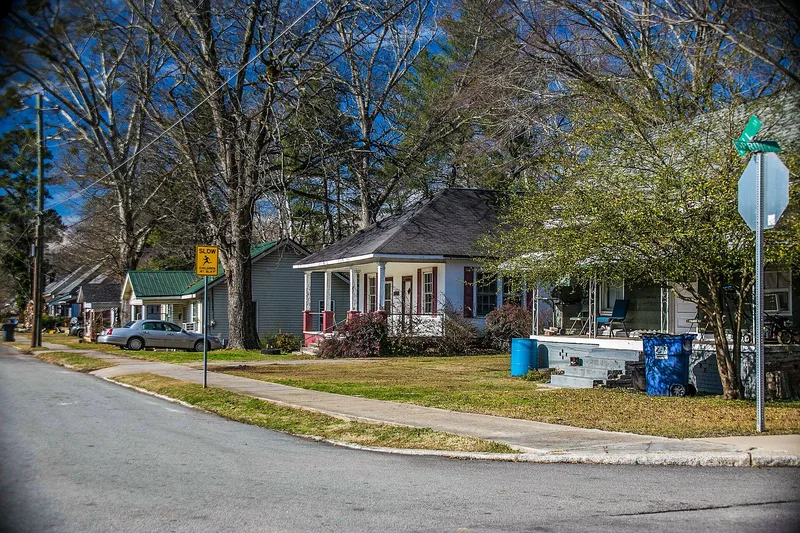
Northwest of downtown Greensboro, Georgia, this 47-acre district combines a cotton mill with the village built for its workers. The Mary Leila Cotton Mill was founded in 1899 by E. A. Copelan and W. R. Jackson, who named it for their wives, and it opened in 1900 with jobs for about 100 residents. The company built roughly 75 one-story frame houses, mostly shotgun, Victorian and Craftsman types, on a grid of streets with alleys, granite curbing, a central ballfield, stores and a church. The brick manufacturing building, with its square tower, grew through additions in 1912 and 1957. A few older dwellings along Richland Street, including the antebellum brick John Godkin House, were absorbed into the village. The district is considered important for its architecture, its planning as a typical Southern mill village, its role in the New South industrial movement and Greensboro's shift from a farm economy, its union history, and its landscape features. The period of significance runs from 1899 to 1934.
Machine-generated summary. This summary was generated by a language model from the official nomination document and has not been reviewed line by line by an editor. It may contain errors. Check the source document before relying on any detail. Source: nomination document (PDF) · catalog entry. Generated October 2026 (model claude-sonnet-5-5, prompt v1.0-2026-10-29).
| Period of significance | 1899-1934 |
|---|---|
| Styles | Shotgun, Victorian Eclectic, and Craftsman/Bungalow mill housing; Greek Revival for the antebellum John Godkin House |
| Areas of significance | Industry, Community Planning and Development, Landscape Architecture, Architecture |
| Acreage | 47 |
| Boundary source | NPS cultural-resource GIS polygon |
| Full listing page | Leila, Mary, Cotton Mill and Village (property record) |
What listing means for this property
This is a historic district. Buildings within its boundary are either contributing (they add to the district's significance) or non-contributing. Owners of contributing income-producing buildings can claim the 20% federal rehabilitation tax credit; homeowners should look at state credits. National Register districts impose no design review by themselves; a local historic district ordinance, if one exists, does (the difference explained).
General information, not legal or tax advice. Rules change; confirm with your State Historic Preservation Office or a qualified adviser.