Laney-Walker North Historic District (Additional Documentation)
Why it's listed
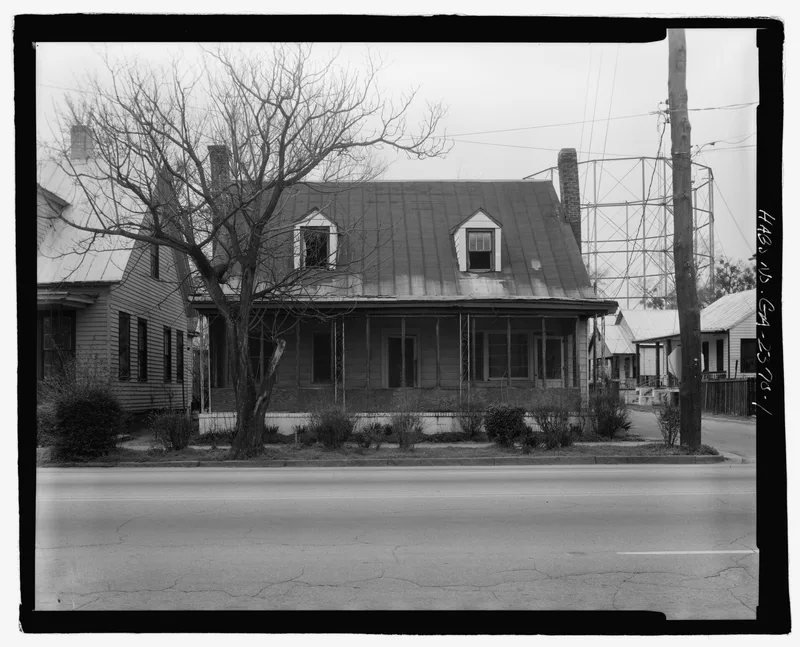
Laney-Walker North is a densely built neighborhood of about 125 acres in Augusta, Georgia, laid out on a strict grid of small, narrow lots. Most buildings are one-story wood cottages, mixed with shotgun and double-pen houses, Victorian homes, brick churches, corner stores, a bank and industrial remnants, dating from the mid-19th century to 1935. Development began after the Georgia Railroad arrived in 1833 and the Augusta Canal was built in 1845-47, drawing Irish laborers and later Chinese workers who opened groceries and laundries. Segregation policies in the early 20th century turned the area into the city's principal Black neighborhood, with its own banks, insurance company, professionals and churches. Among its landmarks are the 1922 Penny Savings Bank building, the 1915 Tabernacle Baptist Church, and the homes of Rev. Charles T. Walker and educator Lucy C. Laney. The district was listed for its social history, architecture, commerce, industry, religion and education.
Machine-generated summary. This summary was generated by a language model from the official nomination document and has not been reviewed line by line by an editor. It may contain errors. Check the source document before relying on any detail. Source: nomination document (PDF) · catalog entry. Generated October 2026 (model claude-sonnet-5-5, prompt v1.0-2026-10-29).
| Period of significance | Mid-19th century-1935 |
|---|---|
| Styles | Vernacular house types (plantation plain, double-pen, shotgun, Victorian cottage, Sandhills cottage) with Victorian Eclectic, Greek Revival, Colonial Revival and Bungalow/Craftsman detailing |
| Areas of significance | Industry, Community Planning and Development, Commerce, Black, Asian, Education, European, Architecture, Religion |
| Acreage | 125 |
| Boundary source | NPS cultural-resource GIS polygon |
| Full listing page | Laney-Walker North Historic District (Additional Documentation) (property record) |
What listing means for this property
This is a historic district. Buildings within its boundary are either contributing (they add to the district's significance) or non-contributing. Owners of contributing income-producing buildings can claim the 20% federal rehabilitation tax credit; homeowners should look at state credits. National Register districts impose no design review by themselves; a local historic district ordinance, if one exists, does (the difference explained).
General information, not legal or tax advice. Rules change; confirm with your State Historic Preservation Office or a qualified adviser.