Kirkwood School

The National Park Service has not published a boundary polygon for this district; the map shows the listed properties inside it and the district's reference point.
Why it's listed
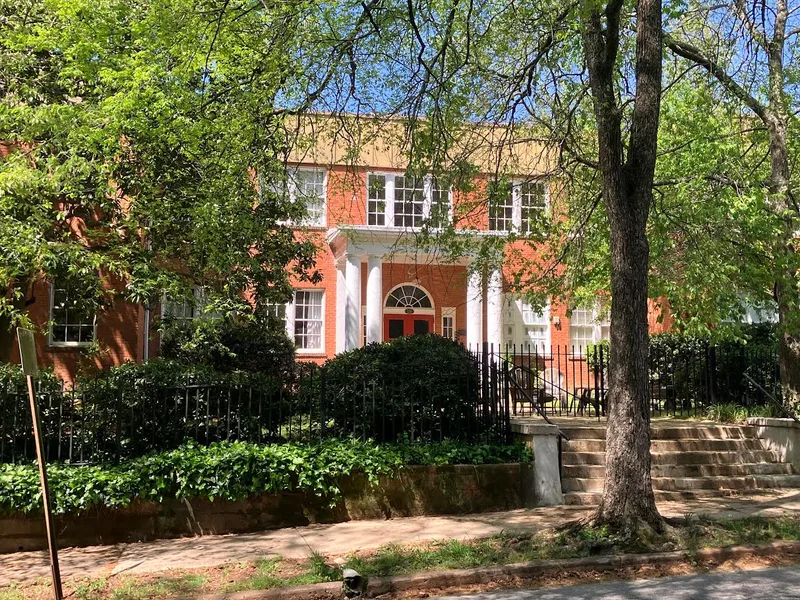
Kirkwood School is a former school campus of about 2.9 acres in the center of the Kirkwood neighborhood in east Atlanta. It grew over six decades. A frame Italianate school opened in 1906 and was later covered in brick veneer. A two-story Colonial Revival main building followed in 1922, with an auditorium added around 1924 and an eight-classroom wing in 1928. A ranch-house-style cafeteria was added in 1950 and a modern library with a butterfly roof in 1964. Several well-known Atlanta architects designed the buildings, which together show changing ideas in school design and education. The school also reflects community effort, since Kirkwood residents funded schools while the town was independent, before it was annexed to Atlanta in 1922. Its desegregation in 1965, followed by the neighborhood's change to a predominantly African American population by 1967, adds to its significance. In the late 1990s the buildings were rehabilitated as loft apartments, keeping many historic features and public spaces.
Machine-generated summary. This summary was generated by a language model from the official nomination document and has not been reviewed line by line by an editor. It may contain errors. Check the source document before relying on any detail. Source: nomination document (PDF) · catalog entry. Generated October 2026 (model claude-sonnet-5-5, prompt v1.0-2026-10-29).
| Period of significance | 1906-1967 |
|---|---|
| Styles | Late 19th and 20th Century Revivals: Colonial Revival; Modern Movement |
| Areas of significance | Architecture, Education, Social History, Black |
| Acreage | 2.9 |
| Boundary source | not published |
| Full listing page | Kirkwood School (property record) |
What listing means for this property
This is a historic district. Buildings within its boundary are either contributing (they add to the district's significance) or non-contributing. Owners of contributing income-producing buildings can claim the 20% federal rehabilitation tax credit; homeowners should look at state credits. National Register districts impose no design review by themselves; a local historic district ordinance, if one exists, does (the difference explained).
General information, not legal or tax advice. Rules change; confirm with your State Historic Preservation Office or a qualified adviser.