Kirkwood Historic District

Why it's listed
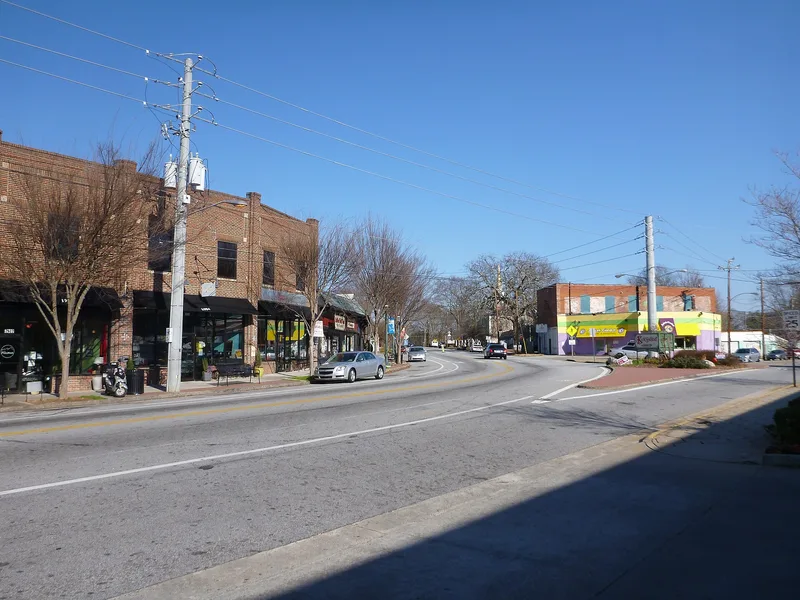
Kirkwood is a large neighborhood on the eastern edge of Atlanta that grew from rural land into an independent city and then a streetcar and automobile suburb. Two trolley lines, opened in 1891 and 1893, shaped its curving main roads and grassy medians, while the Georgia Railroad drew industry such as the Pratt-Pullman Yards, first built in 1906 and later a Pullman rail repair shop. The district includes about 1,790 contributing buildings, mostly houses from the 1870s to the 1960s. Bungalows from the 1920s and American Small Houses from the 1940s are the most common types, alongside Queen Anne, Colonial Revival, Craftsman and Tudor Revival examples. Commercial buildings cluster along Hosea Williams Drive and Oakview Road. Other landmarks include Kirkwood School, three parks, several churches and the Clay Family Cemetery, the last property tied to a pioneer dairy-farming family. Together these resources record the suburb's growth and are why the area was listed.
Machine-generated summary. This summary was generated by a language model from the official nomination document and has not been reviewed line by line by an editor. It may contain errors. Check the source document before relying on any detail. Source: nomination document (PDF) · catalog entry. Generated October 2026 (model claude-sonnet-5-5, prompt v1.0-2026-10-29).
| Styles | Queen Anne, Colonial Revival, Classical Revival, Tudor Revival, Mission/Spanish Colonial Revival, Commercial Style, Bungalow/Craftsman, Moderne, plus Folk Victorian, Georgian Cottage, Ranch House, American Small House and other vernacular types |
|---|---|
| Areas of significance | Architecture, Community Planning and Development, Social History, Industry, Commerce |
| Acreage | 850 |
| Boundary source | NPS cultural-resource GIS polygon |
| Full listing page | Kirkwood Historic District (property record) |
What listing means for this property
This is a historic district. Buildings within its boundary are either contributing (they add to the district's significance) or non-contributing. Owners of contributing income-producing buildings can claim the 20% federal rehabilitation tax credit; homeowners should look at state credits. National Register districts impose no design review by themselves; a local historic district ordinance, if one exists, does (the difference explained).
General information, not legal or tax advice. Rules change; confirm with your State Historic Preservation Office or a qualified adviser.