King, Martin Luther, Jr., Historic District

Why it's listed
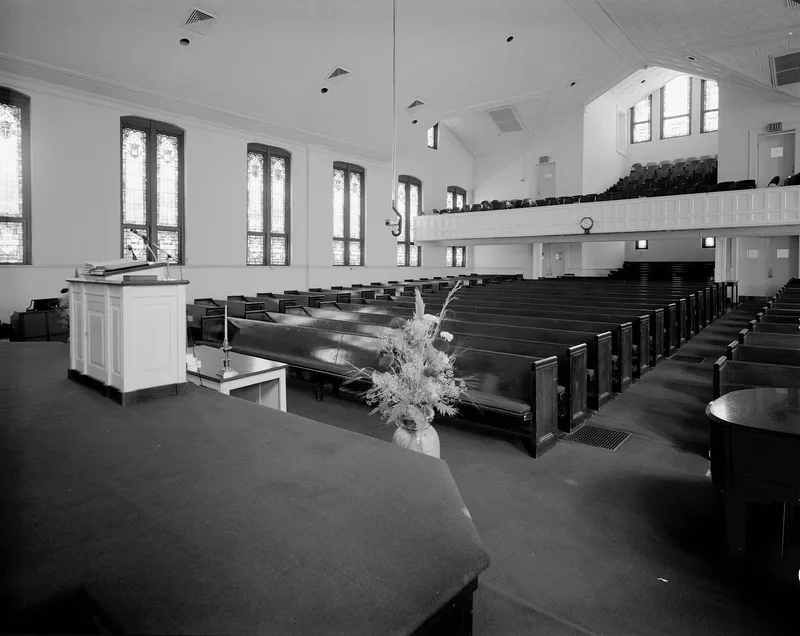
Centered on Auburn Avenue in Atlanta, this roughly 76-acre district preserves the neighborhood where Martin Luther King, Jr., was born in 1929, lived until 1941, and later served as co-pastor of Ebenezer Baptist Church. Landmarks include the church, completed in 1922, his grave site beside it, and his Queen Anne birthplace at 501 Auburn Avenue, built in 1895. Nearby are Victorian houses of the 1880s, double-shotgun rental duplexes from 1920, the Neo-Classical home of Black contractor Alexander Hamilton II, Our Lady of Lourdes Catholic Mission of 1912, and Romanesque Revival Fire Station Number 6 of 1894. After the 1906 race riot, Auburn Avenue became the center of Atlanta's Black business and professional life. The district was recognized because these buildings and sites together document King's early years and the wider history of the city's Black community.
Machine-generated summary. This summary was generated by a language model from the official nomination document and has not been reviewed line by line by an editor. It may contain errors. Check the source document before relying on any detail. Source: nomination document (PDF) · catalog entry. Generated October 2026 (model claude-sonnet-5-5, prompt v1.0-2026-10-29).
| Styles | Queen Anne, Victorian, Neo-Classical, Romanesque Revival |
|---|---|
| Areas of significance | Black, Architecture, Religion, Social History |
| Acreage | 15.4 |
| Boundary source | NPS cultural-resource GIS polygon |
| Full listing page | King, Martin Luther, Jr., Historic District (property record) |
What listing means for this property
This is a historic district. Buildings within its boundary are either contributing (they add to the district's significance) or non-contributing. Owners of contributing income-producing buildings can claim the 20% federal rehabilitation tax credit; homeowners should look at state credits. National Register districts impose no design review by themselves; a local historic district ordinance, if one exists, does (the difference explained).
General information, not legal or tax advice. Rules change; confirm with your State Historic Preservation Office or a qualified adviser.