Johnstonville-Goggins Historic District

Why it's listed
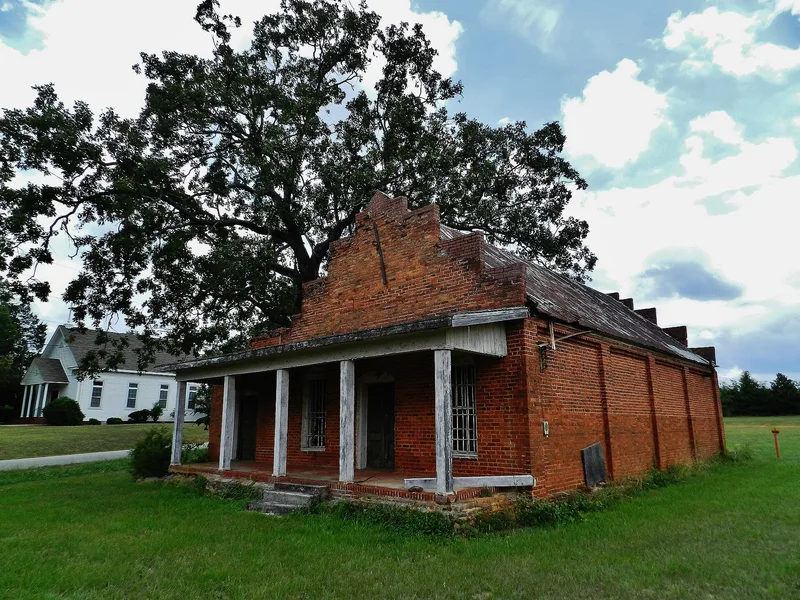
Spread across roughly 7,360 acres of central Lamar County, Georgia, this district joins two small communities and the farmland around them. Johnstonville, founded in 1821, grew at a crossroads and once served as the first county seat of Monroe County. Goggins developed in the mid-19th century along the Central of Georgia Railroad, completed in 1840. Surviving buildings include the Fleming-Wooten-Childs House, begun in 1835 with Greek Revival detailing, the 1866 Goggins General Store and Post Office, several 19th-century churches and family cemeteries, and houses ranging from a central-hallway farmhouse to a Queen Anne-type residence. Terraced fields, tree lines, orchards and dirt roads still outline historic farming, first cotton and later peaches and mixed crops. Rehoboth CME Church and Bethal Baptist Cemetery reflect African-American communities. The district was recognized for its agriculture, architecture, community planning, ethnic heritage and landscape, covering the years 1835 to 1950.
Machine-generated summary. This summary was generated by a language model from the official nomination document and has not been reviewed line by line by an editor. It may contain errors. Check the source document before relying on any detail. Source: nomination document (PDF) · catalog entry. Generated October 2026 (model claude-sonnet-5-5, prompt v1.0-2026-10-29).
| Period of significance | 1835 to 1950 |
|---|---|
| Styles | Greek Revival, Second Empire, Craftsman (with Queen Anne-type, Gabled-Ell and Georgian cottage houses and vernacular rural churches) |
| Areas of significance | Agriculture, Architecture, Community Planning and Development, Black, Landscape Architecture |
| Acreage | 7360 |
| Boundary source | NPS cultural-resource GIS polygon |
| Full listing page | Johnstonville-Goggins Historic District (property record) |
What listing means for this property
This is a historic district. Buildings within its boundary are either contributing (they add to the district's significance) or non-contributing. Owners of contributing income-producing buildings can claim the 20% federal rehabilitation tax credit; homeowners should look at state credits. National Register districts impose no design review by themselves; a local historic district ordinance, if one exists, does (the difference explained).
General information, not legal or tax advice. Rules change; confirm with your State Historic Preservation Office or a qualified adviser.