Jewell Historic District

Why it's listed
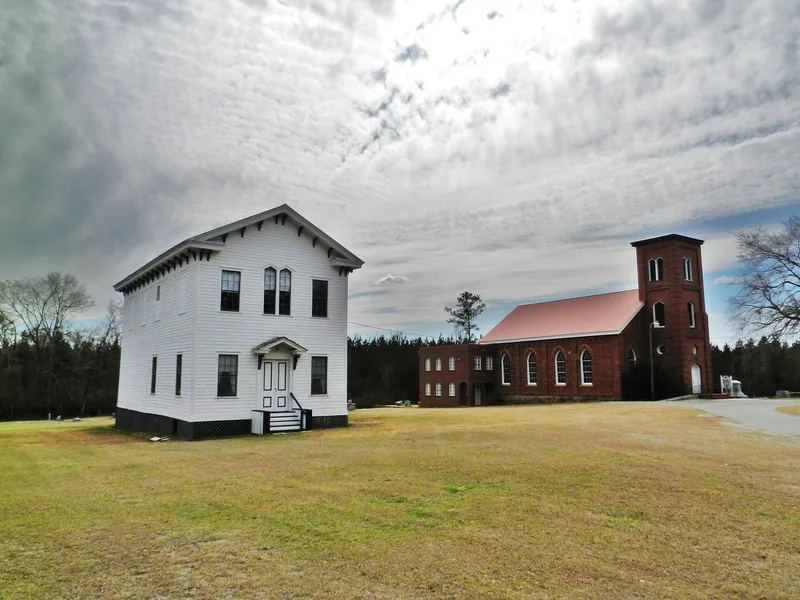
Jewell is a former textile mill village on both banks of the Ogeechee River, split between Hancock and Warren counties in Georgia. Houses, two churches and a small frame schoolhouse face an open green. The Methodist church dates to about 1841-45 and was moved from Rock Mills in 1894. The Baptist church, built about 1871, is described as the oldest brick church in its association. The settlement grew from mills founded by the Shivers family. Daniel A. Jewell, a Massachusetts native, bought the factory in 1857 and became sole owner in 1858. He built it into a textile center producing osnaburgs, kerseys, jeans and yarn. The town was renamed Jewell's Mills in 1872. A fire destroyed the mills in 1927, and a row of mill workers' houses was cleared in the 1960s. Surviving mill houses, Queen Anne residences and the green give the village an intact 19th-century character, and many residents descend from mill families.
Machine-generated summary. This summary was generated by a language model from the official nomination document and has not been reviewed line by line by an editor. It may contain errors. Check the source document before relying on any detail. Source: nomination document (PDF) · catalog entry. Generated October 2026 (model claude-sonnet-5-5, prompt v1.0-2026-10-29).
| Period of significance | 1800-1899 |
|---|---|
| Styles | Gothic, Norman Gothic and Victorian Queen Anne (various buildings) |
| Areas of significance | Industry, Historic - Non-Aboriginal, Architecture |
| Acreage | 56 |
| Boundary source | NPS cultural-resource GIS polygon |
| Full listing page | Jewell Historic District (property record) |
What listing means for this property
This is a historic district. Buildings within its boundary are either contributing (they add to the district's significance) or non-contributing. Owners of contributing income-producing buildings can claim the 20% federal rehabilitation tax credit; homeowners should look at state credits. National Register districts impose no design review by themselves; a local historic district ordinance, if one exists, does (the difference explained).
General information, not legal or tax advice. Rules change; confirm with your State Historic Preservation Office or a qualified adviser.