Jekyll Island Club

Why it's listed
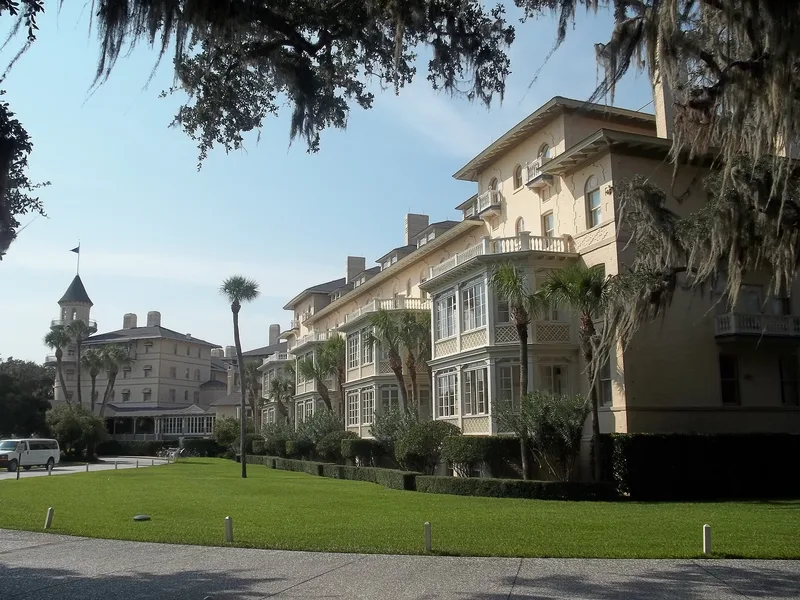
Jekyll Island's Old Village Area covers 240 acres on the island's western shore, where a large brick and wood Victorian clubhouse built in 1887 anchors a group of grand seasonal 'cottages' beneath live oaks and Spanish moss. The Jekyll Island Club, founded in 1888 with membership limited to one hundred, drew families such as the Rockefellers, Morgans, Pulitzers and Vanderbilts. Apartment buildings such as the Club Annex and Sans Souci foreshadowed later condominiums, and Faith Chapel (1904) holds stained glass by Tiffany and Maitland Armstrong. The village included shops, a school, a dock and a power plant, making it largely self-sufficient. The first draft of the Federal Reserve Act was written here in 1910, and a 1915 transcontinental telephone call was placed from the island. Wartime concerns ended club activity in 1942, and the state bought the island in 1947. Today the district serves as a museum village, with Rockefeller Cottage housing the Jekyll Museum.
Machine-generated summary. This summary was generated by a language model from the official nomination document and has not been reviewed line by line by an editor. It may contain errors. Check the source document before relying on any detail. Source: nomination document (PDF) · catalog entry. Generated October 2026 (model claude-sonnet-5-5, prompt v1.0-2026-10-29).
| Period of significance | 1796-1886, 1888-1947, restoration begun 1968 |
|---|---|
| Styles | Late Victorian clubhouse; most late 19th and early 20th century styles and building types |
| Areas of significance | Entertainment/Recreation, Architecture, Social History |
| Boundary source | NPS cultural-resource GIS polygon |
| Full listing page | Jekyll Island Club (property record) |
What listing means for this property
This is a historic district. Buildings within its boundary are either contributing (they add to the district's significance) or non-contributing. Owners of contributing income-producing buildings can claim the 20% federal rehabilitation tax credit; homeowners should look at state credits. National Register districts impose no design review by themselves; a local historic district ordinance, if one exists, does (the difference explained).
General information, not legal or tax advice. Rules change; confirm with your State Historic Preservation Office or a qualified adviser.