Isle of Hope Historic District

Why it's listed
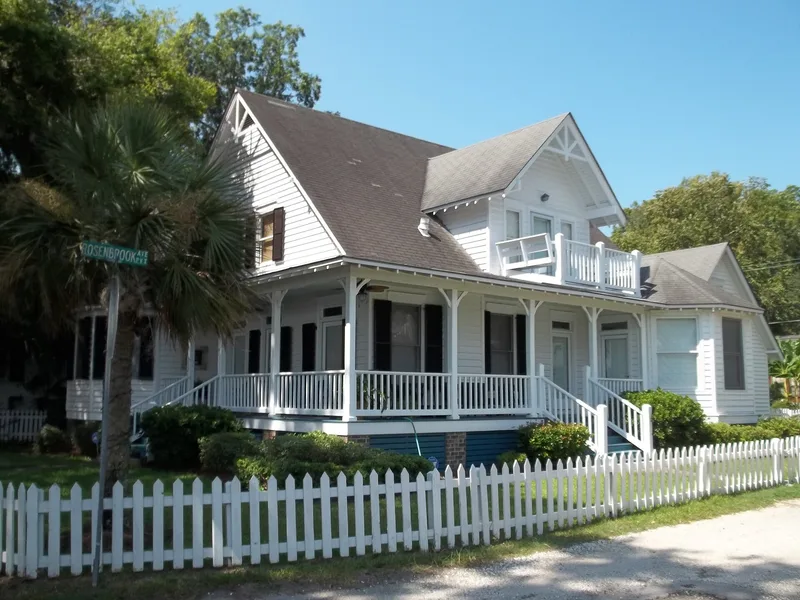
Isle of Hope is a crescent-shaped riverfront community about eight miles from downtown Savannah, wrapped around a horseshoe bend in the Skidaway River. Land grants in the early eighteenth century gave way to subdivision of the Parker family's holdings in the early nineteenth century into large riverfront lots. Wealthy Savannah families built summer houses there in the 1840s and 1850s to escape heat and malaria, and a railroad opened in 1871 made it a popular summering place. By the early twentieth century many residents lived there year round. The houses run from small cottages to mansions in Greek Revival, Victorian Eclectic, Neoclassical and Bungalow styles, nearly all with prominent porches and mostly built of wood. Bluff Drive follows the river and is lined with live oaks, and the houses face the water. The district was recognized for its unusual planning, its varied architecture and its landscaped, semi-tropical setting.
Machine-generated summary. This summary was generated by a language model from the official nomination document and has not been reviewed line by line by an editor. It may contain errors. Check the source document before relying on any detail. Source: nomination document (PDF) · catalog entry. Generated October 2026 (model claude-sonnet-5-5, prompt v1.0-2026-10-29).
| Period of significance | Early 19th - early 20th centuries |
|---|---|
| Styles | Greek Revival, Victorian Eclectic, Neoclassical, Bungalow/Craftsman, and vernacular cottages |
| Areas of significance | Landscape Architecture, Commerce, Architecture |
| Acreage | 100 |
| Boundary source | NPS cultural-resource GIS polygon |
| Full listing page | Isle of Hope Historic District (property record) |
What listing means for this property
This is a historic district. Buildings within its boundary are either contributing (they add to the district's significance) or non-contributing. Owners of contributing income-producing buildings can claim the 20% federal rehabilitation tax credit; homeowners should look at state credits. National Register districts impose no design review by themselves; a local historic district ordinance, if one exists, does (the difference explained).
General information, not legal or tax advice. Rules change; confirm with your State Historic Preservation Office or a qualified adviser.