Inman Park Historic District Boundary Increase

Why it's listed
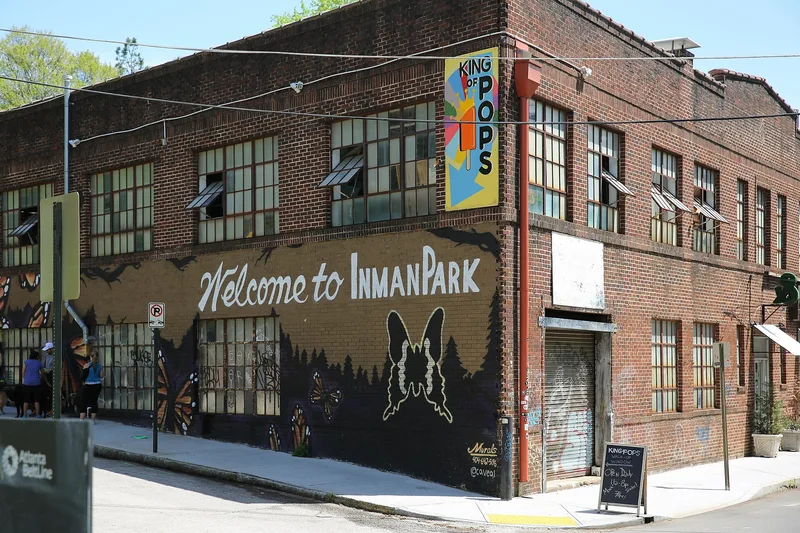
Inman Park is a large residential neighborhood east of downtown Atlanta, developed by Joel Hurt from 1889 and named for his business associate Samuel Inman. Planned by New York landscape gardener Joseph Forsyth Johnson, it followed Olmsted principles, with broad avenues, curving streets and parks including the ten-acre Springvale Park. An early electric streetcar line ran along Edgewood Avenue. The area drew wealthy Atlantans, among them Asa Candler, who built large Queen Anne and Neoclassical Revival houses. From the 1910s, speculative builders added small bungalows, cottages and shotgun houses, and some mansions became rooming houses. This amendment adds blocks of historic houses on Highland and Lake avenues and a few Edgewood Avenue buildings, removes deteriorated areas along DeKalb Avenue, and extends the period of significance from 1923 to about 1945, the year the Inman Park School cafeteria annex was built. The district totals 340 contributing and 75 noncontributing resources.
Machine-generated summary. This summary was generated by a language model from the official nomination document and has not been reviewed line by line by an editor. It may contain errors. Check the source document before relying on any detail. Source: nomination document (PDF) · catalog entry. Generated October 2026 (model claude-sonnet-5-5, prompt v1.0-2026-10-29).
| Period of significance | 1889-1945 |
|---|---|
| Styles | Late Victorian (Queen Anne, Stick/Eastlake, Shingle Style); Late 19th and 20th Century Revivals (Classical Revival, Tudor Revival); Bungalow/Craftsman |
| Areas of significance | Architecture, Landscape Architecture, Community Planning and Development, Transportation |
| Acreage | 135 |
| Boundary source | NPS cultural-resource GIS polygon |
| Full listing page | Inman Park Historic District Boundary Increase (property record) |
What listing means for this property
This is a historic district. Buildings within its boundary are either contributing (they add to the district's significance) or non-contributing. Owners of contributing income-producing buildings can claim the 20% federal rehabilitation tax credit; homeowners should look at state credits. National Register districts impose no design review by themselves; a local historic district ordinance, if one exists, does (the difference explained).
General information, not legal or tax advice. Rules change; confirm with your State Historic Preservation Office or a qualified adviser.