Holland, Dr. Madison Monroe, House

The National Park Service has not published a boundary polygon for this district; the map shows the listed properties inside it and the district's reference point.
Why it's listed
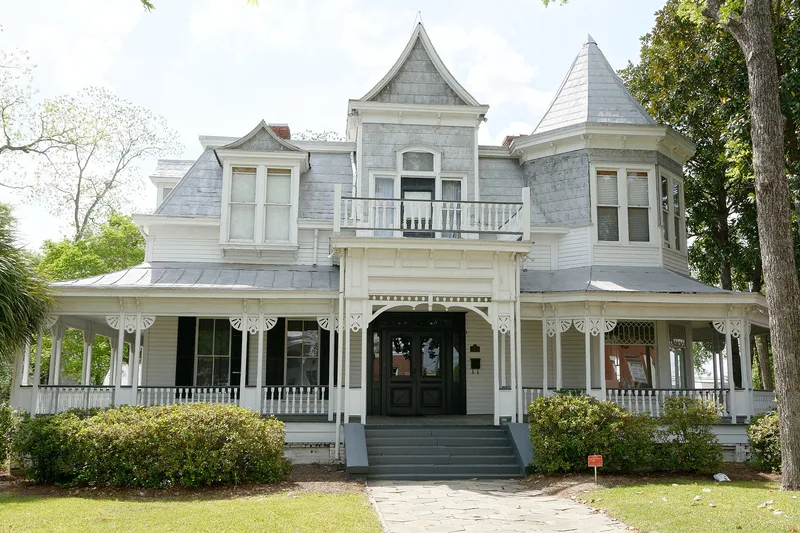
Dr. Madison Monroe Holland's house at 27 South Main Street in Statesboro began in 1888 as a one-story, four-bedroom residence. A second floor with six rooms and a balcony was added in 1908. Holland, one of the town's first doctors, kept his office in the turret room and cared for patients overnight upstairs, since Bulloch County had no hospital. The house is a Queen Anne design with asymmetrical massing, a wrap-around porch, a turret, a central balcony, weatherboard siding, turned balusters and a pressed-metal mansard roof. Interior mantels with beveled mirrors, wooden floors and some original hardware survive. Behind the house stand a cane boiler, a smokehouse and a garage, along with a sidewalk of colored hexagonal pavers, the only one of its kind left in Statesboro. The property was recognized for its architecture and for its role in the town's medical history between 1888 and 1914.
Machine-generated summary. This summary was generated by a language model from the official nomination document and has not been reviewed line by line by an editor. It may contain errors. Check the source document before relying on any detail. Source: nomination document (PDF) · catalog entry. Generated October 2026 (model claude-sonnet-5-5, prompt v1.0-2026-10-29).
| Period of significance | 1888-1914 |
|---|---|
| Styles | Queen Anne |
| Areas of significance | Health/Medicine, Architecture |
| Acreage | 0.9 |
| Boundary source | not published |
| Full listing page | Holland, Dr. Madison Monroe, House (property record) |
What listing means for this property
This is a historic district. Buildings within its boundary are either contributing (they add to the district's significance) or non-contributing. Owners of contributing income-producing buildings can claim the 20% federal rehabilitation tax credit; homeowners should look at state credits. National Register districts impose no design review by themselves; a local historic district ordinance, if one exists, does (the difference explained).
General information, not legal or tax advice. Rules change; confirm with your State Historic Preservation Office or a qualified adviser.